
My daughter, CC, is in a fight for a starting position for the first time in her soccer career. She has been a standout soccer player since she was 6 years old. Recently, she was selected to the Ohio State Pool ODP team as a goalie after making it through 3 tryout phases. That does not seem to matter as the club season comes to an end.
During her 12 years, she has made every team she has ever tried out for and she always seems to be selected to play key positions. Outside of sports, she has been a star too. Life has been very easy for my little girl.
Has life been too easy? Would CC fold under pressure and quit or fight to overcome adversity when she needs to. I really had no idea, but I am in the process of finding out.
CC has been the starting goalie of her select team for 2 full years now. CC is very small compared to other players who have already matured. She is the smallest goalie in the top regional league in which she competes. The ODP trainers were not concerned about her size when they selected her for the state pool team, but I know that the coach of our team would like CC to play bigger. I read that as code for she would prefer a bigger goalie.
4 weeks ago, CC injured her shoulder in a game. CC thought it was a bruise. She complained about it hurting all week, but continued to practice and play. The pain did not subside, so we decided make an appointment to see an orthopedic doctor. CC did not want to go because she thought that they would shut her down for the last three weeks of the season. We did not want to risk a serious injury so we insisted.
CC was diagnosed with a slight shoulder separation and severe tendonitis. Surprisingly, the doctor told CC that she could continue to play out the remainder of the season if she could take the pain. He said there is no structural damage so the condition will not get any worse. He then told her that it won't get any better either until she rests it for 3 weeks and completes some physical therapy.
The following weekend, CC decided to rest for 2 games so that she could be ready for an important big game against the best team in the city the following Monday. Nothing was going to keep her out of that game, except rain which postponed the contest.
The coach called up the B team goalie, who is a big strong and athletic girl. The new goalie played well in the two games CC rested. After those games, the coach asked the B team goalie to join the team for the rest of the season. The coach wanted a backup just in case CC's shoulder acted up and she admitted to me that she wanted to test the new option out for next year and perhaps carry two goalies. CC was in a battle.
The Main Point
I talked to CC about the situation. I told her that it was actually a good situation. After I said that, she looked at me with a confused look. I told her that life has been too easy so far and it unrealistic to think that you will go through life without challenges. I told her that she had two choices, quit or fight for your position. I know that she has been considering concentrating on Volleyball, so I did not know what she would do. I was not going to force her to play if she did not have the heart for it. She sat in silence for a few minutes and then I asked her what she wanted to do. She said she is not giving up. We talked about what she needed to do to earn the respect of the coach again.
CC started an important game last Sunday. She played very well in the first half and made several key saves. She got some ice for her shoulder and prepared to sit on the bench for the last half, however, the coach sent CC out to start the second half. CC made this key save late in a 0-0 game on Sunday. The coach was pleased with CC. She came up big, she played big.
Kids learn more through adversity then they do through triumph.
Showing posts with label Play with Passion. Show all posts
Showing posts with label Play with Passion. Show all posts
Tuesday, May 21, 2013


Sunday, November 6, 2011
Youth Basketball: The Flu Game
On June 10, 1997, Michael Jordan woke up with a stomach virus. He was so sick that he couldn't even sit up. The Chicago Bulls trainer informed Phil Jackson, the head coach, that there is no way that Jordan would play the next night. Jackson started to prepare a game plan that did not include his star player for Game 5 of the 1997 NBA Finals.

The Bulls were playing the Jazz, who had won the previous two games to tie the series at 2 games apiece. The Jazz had all the momentum going into the crucial swing game. The Bulls did not want to go to Utah, where the Jazz were so tough to beat, needing to win the final two games of the series to secure a championship.
On June 11, the competitor, Jordan climbed out of bed late in the afternoon and made his way to the Delta Centre. He arrived just before the tip-off. Jordan stepped onto the court visibly weak and slow. The Jazz, with the superstar combination of John Stockton and Karl Malone took advantage and jumped out to a 16 point lead early in the first half.
But the competitor found a way to endure 44 minutes of play and put up a stat line of 38 points, 7 rebounds, 5 assists, 3 steals and 1 block before he collapsed into Scottie Pippen's arms victorious.
Thursday, August 18, 2011
Youth Sports: What to do if your kid is not a starter
Typically a team carries more players than positions on the field, so logically everyone cannot be a starter. Regardless, every parent thinks that their kid should be a starter.
I believe that everyone on the team should be given a chance to become a starter, but a starting position should be earned on the practice field, at home in the driveway, in the weight room and during games.
So, what should you do if your kid is not starting? Before you call the coach consider the following.
Lou Holtz once said,
You need to evaluate your kid's situation through that lens before you become THAT parent who complains to the coach or conspires behind his / her back.
1) Honestly assess your kid's physical ability vis-a-vis the other kids on the team.
Is your kid fast enough, quick enough, strong enough or coordinated to standout as a starter? I'm not talking about polished skills, we will discuss skill later. I am just talking about physical ability. If not, think about strengthening or acceleration programs. But as a strength / acceleration trainer friend of my once said, "I guarantee that I can make anyone faster, I cannot guarantee that I can make everyone fast."
Once you honestly evaluated your kid's physical potential, decide if the chosen sport is really the best choice. Maybe there's a sport more suitable for your kid's physical abilities. But be careful, you need to have some foresight because physical abilities change as your kid matures.
 For example, my older son was a small, agile finesse soccer player when he was younger. He was a pretty good player and fast enough to compete on B level teams. He had enough skills to make the 9th grade team of the very competitive HS he attended. He grew to 6'3" and lost what little speed he had. He was cut from the team after his 10th grade year because he didn't have enough speed. Competitive soccer is about speed. Perhaps volleyball would have been a better sport for him.
My youngest son has a heart condition. (Read God Loves Baseball to learn about his heart issues) He has played some endurance sports like soccer and did very well, but looking forward to longer games on bigger fields, he would not have been able to keep up. He gave up soccer to play football where every play is less than 30 seconds. He excelled at football, but didn't like it. He won two city championships then stopped playing football to concentrate on baseball and golf.


2) Honestly assess your kid's motivation. Does your kid really like the sport? Sit down with your kid and determine that. Perhaps there's a sport that your kid would be more interested in. Consider that a sport that matches his or her physical abilities might be more motivating. Let your kid decide which sport he / she would enjoy. Lots of parents push the sport that they know or played as a kid. That would be the parent's motivation, not the kid's.
I loved baseball growing up. Still do. I could not wait to teach my first son how to play baseball. He had an outstanding arm and was a good fielder, but was literally scared to death in the batters box. I made him play for a few years thinking that he would eventually get over the fear. He never did. He loved playing the outfield and pitching, but didn't want to hit. That really is not an option in little league. He decided to quit baseball and play soccer year-round. I was ok with it. My second son was born with the baseball bug and plays baseball at the highest level every year he has played. He loves it.
3) Honestly assess your kid's attitude regarding the sport. Is your kid working as hard as the other kids on the team. At the end of soccer practice when the team is doing wind sprints, is your kid in the front of the group or the last one. When your kid gets home after a basketball tournament, do they go in and sit on the couch or go right from the car to the hoop in your driveway? Does your kid whine about going to practice or are they always eager to go? Do they seek out the coach for extra reps or ask you if they can work with a professional trainer? Is your kid really interested in improving his or her skills to get better so that they can earn a starting sport and keep it?
I believe that everyone on the team should be given a chance to become a starter, but a starting position should be earned on the practice field, at home in the driveway, in the weight room and during games.
So, what should you do if your kid is not starting? Before you call the coach consider the following.
Lou Holtz once said,
“Ability is what you're capable of doing. Motivation determines what you do. Attitude determines how well you do it.”
You need to evaluate your kid's situation through that lens before you become THAT parent who complains to the coach or conspires behind his / her back.
1) Honestly assess your kid's physical ability vis-a-vis the other kids on the team.
Is your kid fast enough, quick enough, strong enough or coordinated to standout as a starter? I'm not talking about polished skills, we will discuss skill later. I am just talking about physical ability. If not, think about strengthening or acceleration programs. But as a strength / acceleration trainer friend of my once said, "I guarantee that I can make anyone faster, I cannot guarantee that I can make everyone fast."
Once you honestly evaluated your kid's physical potential, decide if the chosen sport is really the best choice. Maybe there's a sport more suitable for your kid's physical abilities. But be careful, you need to have some foresight because physical abilities change as your kid matures.

My youngest son has a heart condition. (Read God Loves Baseball to learn about his heart issues) He has played some endurance sports like soccer and did very well, but looking forward to longer games on bigger fields, he would not have been able to keep up. He gave up soccer to play football where every play is less than 30 seconds. He excelled at football, but didn't like it. He won two city championships then stopped playing football to concentrate on baseball and golf.
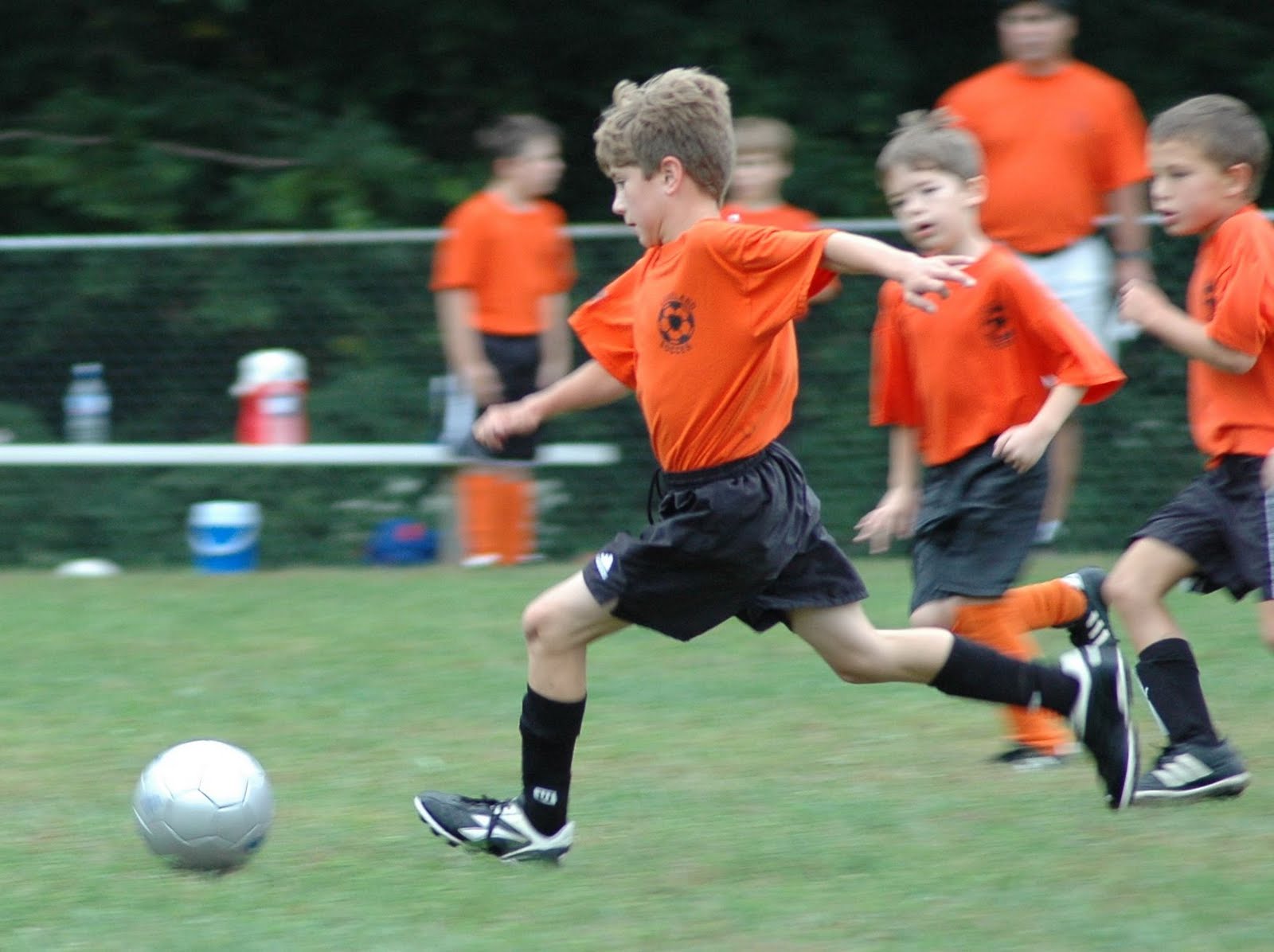


2) Honestly assess your kid's motivation. Does your kid really like the sport? Sit down with your kid and determine that. Perhaps there's a sport that your kid would be more interested in. Consider that a sport that matches his or her physical abilities might be more motivating. Let your kid decide which sport he / she would enjoy. Lots of parents push the sport that they know or played as a kid. That would be the parent's motivation, not the kid's.
I loved baseball growing up. Still do. I could not wait to teach my first son how to play baseball. He had an outstanding arm and was a good fielder, but was literally scared to death in the batters box. I made him play for a few years thinking that he would eventually get over the fear. He never did. He loved playing the outfield and pitching, but didn't want to hit. That really is not an option in little league. He decided to quit baseball and play soccer year-round. I was ok with it. My second son was born with the baseball bug and plays baseball at the highest level every year he has played. He loves it.
3) Honestly assess your kid's attitude regarding the sport. Is your kid working as hard as the other kids on the team. At the end of soccer practice when the team is doing wind sprints, is your kid in the front of the group or the last one. When your kid gets home after a basketball tournament, do they go in and sit on the couch or go right from the car to the hoop in your driveway? Does your kid whine about going to practice or are they always eager to go? Do they seek out the coach for extra reps or ask you if they can work with a professional trainer? Is your kid really interested in improving his or her skills to get better so that they can earn a starting sport and keep it?
Wednesday, August 17, 2011
Youth Sports: How Far Can Natural Ability Take a Young Athlete
 |
| Nic at age 2 |
Will these young athletes be high school standouts, college scholarship studs or professional phenoms?
 |
| CC at 6, played with 8 and 9 year olds |
The answer. Who knows? Each kid develops at their own pace. Some kids develop coordination early and dominate in sports but then plateau. Others start off awkwardly but turn into good athletes. Some kids grow early others are late bloomers. All kids are born with confidence, but some lose it. Some kids love for sports grows, others lose interest.
Yes success in sports requires natural ability, but passion for the sport and a strong work ethic are equally essential. A kid will not likely succeed at their chosen sport long term if he or she does not have all three qualities.
What happens to a young athlete who is born with natural ability, develops a love for the sport, but has no work ethic?
It can be a real blessing when things come so naturally to an athlete at really young age. These kids use their natural ability to achieve early success. Success builds their confidence and their love for the game. They love the game because success and its associated praise from parents and coaches comes so easily. This passion and natural ability will likely motivate the young athlete to tryout for a more competitive team.
This is when the naturally gifted player may come to the realization that they aren't so special anymore. It may be the first time that they are surrounded by other equally gifted players or perhaps better players. Their confidence will be tested for the first time. They might lose their grip on a favorite position. The praise that fueled them before doesn't come as frequently. They might start losing playing time. Self-doubt creeps in and suddenly they start thinking instead of reacting instinctively. This is when mistakes happen. They had never failed before so they do not know how to overcome adversity. Their passion for the game wanes. They never had to work hard to be good before, so they never developed a work ethic. They start to "not try" because they would rather be viewed as a kid who's not trying hard instead of a kid who is trying hard and failing. Then they quit.
What happens to a young athlete who has natural ability and a work ethic, but no passion for the sport?
Some kids who were born with athletic ability, show up to every practice, work hard and have a desire to improve, but they do not really love the game. Perhaps they stick with it because they are so good at it. Perhaps they stick with it because they are being forced to play by parents who are living vicariously
Wednesday, July 20, 2011
Youth Basketball: One Very Special Game
I write about select youth sports. Actually most of my stories are about premier level select sports where the the best players in the area, region, state or even country compete against each other. You would think that the parents of these select athletes would be completely and consistently proud, yet many, way too many, are completely frustrated and never satisfied. These parents have lost perspective. I have asked my dear friend Ann and fellow blogger to give us some perspective. Ann writes the Intramuralist.
 Allow me to humbly share that Josh is an accomplished inside shooter; hence, he plays near to the basket, thereby increasing the probability of a successful shot. The challenge with our enthusiastic young man playing basketball’s “4 spot” is that Josh is approximately, only 48” tall. While might often comes in compact packages, Josh guarded and was guarded by players 12-24” taller. As Josh gasped during an initial time out, “That is one big dude.”
The game remained fairly close and was full of stereotypical hard court action. There were a few 3’s, blocked shots, fierce rebounds, and solid team play. There were fast breaks, efficient defense, and even some jaw-dropping, notably unselfish assists. We chuckled on the sidelines at Josh’s most creative assist...

 What was not stereotypical about this game was that each athlete had a disability. The range of physical impairment was wide. While none utilized a wheelchair, one had no use of his left hand; the left leg of another didn’t function; and cognitive challenges covered a wide span. Yet each of the basketball players seemed thrilled to be there... thrilled to play... and thrilled to find a place where they were generously affirmed.
The Cincinnati Swish Spirit program, affiliated with Cincinnati Swish Basketball, is a non-profit organization based in Cincinnati, Ohio. Their mission is to provide every kid (6 - 16) regardless of disability the opportunity to learn and play basketball.
Ann is a mom of three boys, an avid lover of sports and a blogger. While at Purdue in the late 80's, she competed in every possible intramural competition. Winning slow pitch and fast pitch softball, basketball and racquetball championships. Her blog is not about sports specifically, it's about life and life differences, but she never forgets that we ultimately all play for the same team.
As an avid sports fan, I enjoy multiple seasons via my three young sons. To date, my favorite game this year was the hardwood season opener, played in by Josh, my youngest. Both he and I thought it was wonderful.
Prior to tip-off, the teams proudly donned their new uniforms — Carolina blue for the Spirit, a roaring red for the visiting Firebirds. After weeks of at times, individually grueling practice, it was fascinating to me the unique amount of hope the new uniform instilled. The boys — and girls — were eager to play.
As my youngest son took the floor, his countenance was seemingly new. It was a unique combination of confidence, excitement, and toughness. This was a moment Josh had long waited for. Tip-off came and off Josh immediately went.

The game remained fairly close and was full of stereotypical hard court action. There were a few 3’s, blocked shots, fierce rebounds, and solid team play. There were fast breaks, efficient defense, and even some jaw-dropping, notably unselfish assists. We chuckled on the sidelines at Josh’s most creative assist...
He received the ball just past mid-court and was quickly surrounded by 3 defenders. The coaches yelled for Josh to pass the ball. (Inside I wonder if he thought, “Sure. Great idea, guys. Any thought about how to get it past 3 men way huger than me?”) After a rather pregnant pause and then a seemingly internal light bulb going off, Josh glanced around, shrugged his shoulders, and proceeded to use his height to an extreme advantage by quickly rolling the ball through a defender’s legs. It went straight to his teammate, heading for the basket.

 What was not stereotypical about this game was that each athlete had a disability. The range of physical impairment was wide. While none utilized a wheelchair, one had no use of his left hand; the left leg of another didn’t function; and cognitive challenges covered a wide span. Yet each of the basketball players seemed thrilled to be there... thrilled to play... and thrilled to find a place where they were generously affirmed.
The Main Point
For those of us who live with a special needs individual, there are days when you question if his or her experience is somewhat lesser. There are even moments where people strongly suggest that it is... moments where you feel the world looks down on the disabled. But on this day — via Spirit basketball — there was nothing lesser. It was a wonderful game.
The Cincinnati Swish Spirit program, affiliated with Cincinnati Swish Basketball, is a non-profit organization based in Cincinnati, Ohio. Their mission is to provide every kid (6 - 16) regardless of disability the opportunity to learn and play basketball.
Sunday, April 10, 2011
Youth Baseball: Find a Confidence Building Coach
To succeed in baseball you need skills, knowledge, passion, a short memory and the most important ingredient, confidence.
My son had all of these ingredients until last year. Last year, my son struggled and I blame myself because I saw it coming.
My son enjoyed three years of success playing under a task master head coach who taught him the game and an assistant coach who built his confidence. After the 2009 season, the confidence building assistant coach left the team. Unfortunately, he left with little notice so we didn't explore options.
Prior to the 2010 season, my wife and I were very concerned about my son's baseball psyche without the assistant coach there to counterbalance the head coach. Sure enough, Nic had the worst season of his career and 2010 turned out to be a long painful season to endure as predicted. There were some bright spots during the year, like Nic's first home run over a fence in Noblesville Indiana and the entire Cooperstown Dreams Park Tournament. Despite these highlights my son still contemplated quitting the game that he loved so much once.
Luckily, I persuaded my son to tryout for other teams for the 2011 season. During the tryout process, coaches saw his potential, his leadership and his knowledge of the game. All of them were complimentary. The tryout process was the first step back to a confident state of mind.
During the tryout process, we interviewed coaches with as much scrutiny as the coaches were evaluating my son. We were in search of a confidence building coach. We not only found a confidence building coach, but we found an entire coaching staff who would provide a positive environment. We jumped at the opportunity.
My son played fall ball with the new team and struggled in the beginning. His self-confidence was still low, but the confidence that the coaching staff had in my son was still sky high. By the end of the fall ball season, my son was hitting the ball hard and was looking forward to the spring season.
 |
| Single over the SS |
 |
| Returning to the Field after a 3 Run Double |
This weekend, playing against some of his old teammates who were now scattered among other teams, he enjoyed success again. In the semi-final game of the tournament he had 6 RBIs. He did it by getting back to his old style of hitting the ball the other way.
My son also played a flawless second base (when he wasn't catching). When my son asked his previous coach if he could earn a chance to play second, the coach chuckled and told my son that he is not an infielder. He completely dismissed him.
It was a thrill for me to watch my son this weekend. I got to see his contagious smile and his geniune love of the game again.
Quick word of advice. Find a coach who builds confidence and run away from a coach who erodes it. I was an idiot for not finding a better situation for my son last year.
Monday, March 14, 2011
Youth Soccer: Not Playing Up to Her Potential
What do you do when your young athlete is not playing up to his or her potential?
I say bite your tongue until your son or daughter wants to talk about it. That's what I did this weekend and it seemed to work.
This past weekend, we went to Columbus for an elite level invitational soccer tournament.
My daughter has not been very thrilled about soccer since last fall. In fact, she has mentioned on more than one occasion that this is her last year. How quickly things change, last year she was all about soccer. At that time, she was a star on her team, a scoring machine.
Fast-forward to a new coach with a new system and a new group of girls. Things are radically different. While others have flourished in the new environment, but my daughter has not and her love for soccer has waned.
With her confidence at a low point, she gets frustrated quickly. The high level of determination that she used to bring to every game has diminished greatly. Instead of battling through defenses, she now gets knocked off the ball and on to the ground with ease. To make matters worse, she has been stopping play regularly as she cries on the ground.
Crazy Youth Sports Parent Alert
This has been a bit frustrating for me and my wife to watch. I actually lost some self-control for a split second Saturday when I yelled, "GET UP, YOU'RE NOT HURT." I immediately regretted my comment even though I knew it was true.
She did not contribute much in the two games on Saturday. I was secretly wondering why we even came up. After the games, we drove in silence to the hotel. I was kicking myself for feeling agitated by her play. "She is 10" I kept telling myself as I bit my tongue and search my brain for something to say. By the way, we don't sugar coat things. We do not tell our kids that they played well if they didn't. My daughter is smart and self-aware. She knows when she has not played well and doesn't like to talk about it when it happens.
Her spirits were lifted after spending time with teammates in the hotel pool and at dinner. At night, she was ready to talk.
She said, "Dad, it is not fair that I did not get to play goalie at all today."
Oh that is what was bothering her. I asked her if she thought the other goalie did well in the games.
She said, "yes she played great, but we should be splitting the time."
I said, "Honey, the goalie has to be the toughest player on the field. It takes lots of bravery. It takes lots of determination. You have not been showing the coaches how incredibly tough you are lately. You've been getting knocked down and crying a lot. I think that the coach wants to protect you. He probably thinks that you get hurt easily. Listen, I know that you're tough. Your mother and brother know you're tough. You know you're tough. So if you want to play goalie, you need to show the coach that you are physically and mentally tough again. Until then make things happen on the field by hustling, staying on your feet and making good passes and shots."
She did not say anything in return, but I knew she was listening.
As fate would have it, the team's primary goalie couldn't play on Sunday. She suffered an ankle sprain making a tough save late Saturday. On Sunday morning, my daughter, CC, started in goal. She played with absolute toughness and made some tremendous saves. She only allowed one goal all day and her team won both Sunday games.
After the game, I just ran up to her with a big smile on my face and gave her a big affirmation hug because I could tell by her eyes that she was very proud of herself.
On the car ride home, she said that she wants to get an official club goalie jersey for next season.
Next season? I thought she was done with soccer.
The Main Point
What do you do when your young athlete is not playing up to his or her potential?
1) Think about your young athlete's age and situation. Do you really need to do or say anything?
2) Don't shower them with disingenuous praise. Kids are a lot smarter than parents give them credit for. They know how they did. They know where they rank. They probably know that they could be doing better.
3) If you need to talk, talk about aspects of the game that your athlete did do well.
4) Look and listen for clues that they may not want to talk about it at all. Kids put pressure on themselves, they don't need added pressure.
5) Wait, if you are generally supportive and rational, your kid will eventually engage with you about the frustrations they have regarding the sport they are playing. They will seek your wisdom on their terms in their time. If you are typically an ass - they will probably not approach you. Then you need to answer this question Are you playing up to your potential as a father or mother?
6) Finally, be prepared that they may be just fine playing below their potential and having fun instead. It probably will not change their lives that much. Only 2 to 5% of HS Athletes play in college. Less than .5% of HS athletes play pro.
I say bite your tongue until your son or daughter wants to talk about it. That's what I did this weekend and it seemed to work.
This past weekend, we went to Columbus for an elite level invitational soccer tournament.
My daughter has not been very thrilled about soccer since last fall. In fact, she has mentioned on more than one occasion that this is her last year. How quickly things change, last year she was all about soccer. At that time, she was a star on her team, a scoring machine.
Fast-forward to a new coach with a new system and a new group of girls. Things are radically different. While others have flourished in the new environment, but my daughter has not and her love for soccer has waned.
With her confidence at a low point, she gets frustrated quickly. The high level of determination that she used to bring to every game has diminished greatly. Instead of battling through defenses, she now gets knocked off the ball and on to the ground with ease. To make matters worse, she has been stopping play regularly as she cries on the ground.
Crazy Youth Sports Parent Alert
This has been a bit frustrating for me and my wife to watch. I actually lost some self-control for a split second Saturday when I yelled, "GET UP, YOU'RE NOT HURT." I immediately regretted my comment even though I knew it was true.
She did not contribute much in the two games on Saturday. I was secretly wondering why we even came up. After the games, we drove in silence to the hotel. I was kicking myself for feeling agitated by her play. "She is 10" I kept telling myself as I bit my tongue and search my brain for something to say. By the way, we don't sugar coat things. We do not tell our kids that they played well if they didn't. My daughter is smart and self-aware. She knows when she has not played well and doesn't like to talk about it when it happens.
Her spirits were lifted after spending time with teammates in the hotel pool and at dinner. At night, she was ready to talk.
She said, "Dad, it is not fair that I did not get to play goalie at all today."
Oh that is what was bothering her. I asked her if she thought the other goalie did well in the games.
She said, "yes she played great, but we should be splitting the time."
I said, "Honey, the goalie has to be the toughest player on the field. It takes lots of bravery. It takes lots of determination. You have not been showing the coaches how incredibly tough you are lately. You've been getting knocked down and crying a lot. I think that the coach wants to protect you. He probably thinks that you get hurt easily. Listen, I know that you're tough. Your mother and brother know you're tough. You know you're tough. So if you want to play goalie, you need to show the coach that you are physically and mentally tough again. Until then make things happen on the field by hustling, staying on your feet and making good passes and shots."
She did not say anything in return, but I knew she was listening.
 |
| Tough 1V1 save before getting drilled |
After the game, I just ran up to her with a big smile on my face and gave her a big affirmation hug because I could tell by her eyes that she was very proud of herself.
On the car ride home, she said that she wants to get an official club goalie jersey for next season.
Next season? I thought she was done with soccer.
The Main Point
What do you do when your young athlete is not playing up to his or her potential?
1) Think about your young athlete's age and situation. Do you really need to do or say anything?
2) Don't shower them with disingenuous praise. Kids are a lot smarter than parents give them credit for. They know how they did. They know where they rank. They probably know that they could be doing better.
3) If you need to talk, talk about aspects of the game that your athlete did do well.
4) Look and listen for clues that they may not want to talk about it at all. Kids put pressure on themselves, they don't need added pressure.
5) Wait, if you are generally supportive and rational, your kid will eventually engage with you about the frustrations they have regarding the sport they are playing. They will seek your wisdom on their terms in their time. If you are typically an ass - they will probably not approach you. Then you need to answer this question Are you playing up to your potential as a father or mother?
6) Finally, be prepared that they may be just fine playing below their potential and having fun instead. It probably will not change their lives that much. Only 2 to 5% of HS Athletes play in college. Less than .5% of HS athletes play pro.
Sunday, November 14, 2010
Youth Basketball: The Last Second Shot
If competition makes a player better and stronger, then my daughter CC improved yesterday.
Game 162
Game 162

CC's team fell behind 8 to 2. Scoring was difficult for both teams, but CC's team battled back. CC hit a nice 15 foot baseline jump shot over a defender to make it 8-5 late in the game (Pictured).
She also made a key play with less than a minute left. The star of the other team was stole a pass and broke for the basket on a fastbreak. A fastbreak that would have put the game out of reach. CC ran full speed to foul the girl. It was an aggressive foul and both girls went to the ground hard. (The girl she fouled is her AAU teammate.) Luckily, it was not a shooting foul and our team stole the resulting inbounds pass.
The two teams traded important possessions that could have decided the game, but no shots found the bottom of the net. With less than 10 seconds left, CC's best friend took the ball into the lane and was fouled. Unfortunately, she missed the first shot of a 1 and 1 that would have tied the game at 8-8 with 3 seconds left. CC's team would get another chance to win as the rebound off of the missed free throw went out off of the other team.
A play was devised to get CC the final shot. CC got free on the baseline. She received the pass. The defender popped out to defend the shot. With .5 seconds left, CC was able to get the shot off, but it was blocked as the defender hammered CC. (The girl who fouled her was another of her AAU teammates.) Both girls went to the ground tangled up. Unbelievably, the refs did not call a foul and our team lost 8-7.
Our coach questioned the ref after the game. He asked if the time expired before the shot and foul. The ref said no. He then asked the ref why he did not call a foul. The ref told our coach that the defender went straight up. Oh well.
After the game, I wondered that if the foul had been called if CC would have been nervous. She told me, "no way Dad and I would have made the shots."
The Main Point
Games like this build character.
Thursday, November 11, 2010
Youth Sports: Do You Think Obama Played Competitive Youth Sports?
I have several posts throughout Statsdad.com declaring that participating in competitive youth sports prepares children for life. Notice, I didn't say mere participation in sports prepares kids for life. It's competition that inspires one to overcome and achieve. Competition is vital for growth and development.
Notice too, I did not say anything about winning. Life lessons are learned through winning and losing. Preparing to win is what is important.
Finally, I do concede that there are many benefits to playing sport just for fun. And even in competitive sports "fun" is a key element for success. You have to like what you are doing to succeed.
This same principle applies to young artists and musicians and actors and writers and students. The world is a competitive place for everyone not just athletes. It's a fact, the world typically rewards those who are better or work harder or both. This is a good thing. This dynamic pushes people to work harder to achieve goals. The opposite is communism and we all know how successful that was.
There's a great post that echoes these thoughts on PajamasMedia called It's how you play the game: The Fate of Western Civilization and Grade School Soccer. A shout out to the always interesting blog Your Kid's Not Going Pro for the link. The article made me wonder if Obama ever played competitive sports growing up?
The Main Point
Don't stress winning, stress preparing to win, stress hard work and hustle. Winning will likely follow. Your kids are going to win and they are going to lose. They are going to make saves and give up goals. They will get hits and strike out. They will make teams and they will to get cut from teams. They will start and they will sit the bench. Regardless, if they work hard then they are going to grow during the process and they will be prepared for life.
Notice too, I did not say anything about winning. Life lessons are learned through winning and losing. Preparing to win is what is important.
Finally, I do concede that there are many benefits to playing sport just for fun. And even in competitive sports "fun" is a key element for success. You have to like what you are doing to succeed.
This same principle applies to young artists and musicians and actors and writers and students. The world is a competitive place for everyone not just athletes. It's a fact, the world typically rewards those who are better or work harder or both. This is a good thing. This dynamic pushes people to work harder to achieve goals. The opposite is communism and we all know how successful that was.
There's a great post that echoes these thoughts on PajamasMedia called It's how you play the game: The Fate of Western Civilization and Grade School Soccer. A shout out to the always interesting blog Your Kid's Not Going Pro for the link. The article made me wonder if Obama ever played competitive sports growing up?
The Main Point
 |
| Save |
 |
| No Save - Goal |
Tuesday, October 12, 2010
Youth Golf: City Championship
It takes lots of skill and a little luck to win a golf match. It takes passion to win a championship. Passion is what motivates an athlete to work hard between matches. Some kids have the dedication to succeed in sports and others don't.
Game 149
The nine golfers on my son's golf team have the passion and drive to succeed at golf. As a result, they won the Cincinnati City Championship by 33 strokes.
To make this very talented team, my son played 37 straight days. He then competed in a two day tournament tryout and qualified 3rd overall. He took one day off. Then he played 14 straight days before the first matches and the beginning of school. In total he played 52 of 53 days. I am sure that he has played or practiced 75 of the past 105 days. He certainly has the passion and work ethic needed to succeed. During this time, his ranking in Call of Duty plummeted from among the world's best. He lost his passion for video games, thankfully.


My son, Nic, played football for his school team and won two Cincinnati City championships (3rd grade and 4th grade). After his second year of football he decided that he did not have the passion to play the sport anymore so he did not sign up for football as a 5th grader. He went back to soccer and had a good time but did not have the passion for soccer. He contemplated going back to football, but his school established its first ever golf team when he was in 6th grade. He decided to tryout for golf. He made the inaugural team and has never looked back.
The Main Point
Kid needs self motivation, passion, to succeed at a sport. In other words, they need to love what they are doing to do it to their highest potential. Are your kids playing a sport they love or are they playing a sport you love?
Thursday, August 19, 2010
Youth Golf: How to Make the Golf Team
If you son or daughter wants to make the golf team it takes skills, practice, performance under pressure and passion because golf is typically very competitive and the margin for error is low. In baseball tryout you can miss hit a few balls and still make the team. In a basketball tryout you can miss a few shots and still make the team. In a football tryout you can miss a couple of blocks or tackles and still make the team. In a golf tryout, every shot counts.
Last year, my son's catholic school started a golf team consisting of 6th, 7th and 8th graders. A PGA teaching pro, who is a parishioner of the church, volunteered to be the coach. The coach conducted a 2 day tryout. Each potential player played 18 holes over a two day period. The players with the top nine scores were selected to be on the competitive A team. The A team played against other schools and clubs. The other 30 or so kids played on the B team. The B team competed weekly against each other.
Last year in 6th grade, my son, Nic, posted a total score of 101 and was the ninth golfer to make the team. I remember that he worked hard to secure that spot in the weeks preceding the tryout. During the season he became more and more confidence and improved with each match.
As the 2010 tryouts approached, Nic was busy playing baseball. Many of the competitors for the nine coveted spots did not play baseball so they had more time to work on their golf games. Nic heard that many of the kids had improved greatly. Nic knew he needed to make up for lost time, so once baseball ended, Nic dicated himself to golf. In fact, he played 37 straight days leading up to the tryout tournament. Some days he played 27+ holes. When Nic was not on the course he was in the back yard with his pitching wedge or in the basement making a miniature golf course.

The tryout was Tuesday and Wednesday of this week. My son shot an 82 (10 over par) and secured the 3rd position on the team. He was 6 over par after the first 3 holes of the tryout. I am proud that he kept his composure. He improved 19 stokes over last year. All of his friends who also worked hard made the team.
The Main Point
Self motivated people who pursue a goal with passion always succeed. The key is self motivation. My son would not have made the team if I was pushing him to do something he did not want to do. One parent of a kid who did not make the team said, "I wish my son had Nic's drive. If he did he would had a better chance."
Sunday, July 18, 2010
Youth Basketball: The Will to Win
 I like watching basketball. It's a more intimate game than soccer, baseball, softball or football. The fans are so close to the action. What I like the most is that I can see the determination on the faces of the players who are in it to win it.
Games 101 and 102
I watched my daughter play basketball on Thursday and Saturday this week. On Thursday, her 4th grade team was playing against all 5th grade team. The difference in size between the two teams was considerable. The 5th grade team intimidated CC's team and beat them by a wide margin the first time they played two weeks ago. The final score, however, did not tell the entire story. In the second half of that game our scrappy girls outscored the 5th grade team and gained some confidence.

I was most impressed with my daughter's will to win. I was also impressed with the will to win from the twin tower twins on the other team. Both girls a full 12 inches taller than my daughter, clearly did not want to lose to a younger team.
My daughter played the entire game because several girls including the backup point guard were on vacation. Her energy level never diminished when it counted even though it looked like she was going to throw up. Her desire to drive the lane never diminished even though she was getting beat up. She clearly wanted to beat the older team. You could see it on her face. I could feel her will to win every time she made eye contact with me as the game went to overtime.
The 5th grade team had tied the game at the end of regulation and then won on a free throw with 2 seconds left. CC's team lost but it was a moral victory against a much bigger team.
Saturday morning CC played against the best coached team in the league. The two best girls on that team are her teammates on her elite soccer team. It was fun to watch them battle each other. My daughter wanted to beat her friends just as badly as she wanted to beat the 5th grade team.
Unfortunately, her team was no match for the other team and CC's team fell behind 18-0. The well coached point guard from the other team schooled our team. She would pass the ball then break for the basket for a classic give and go. My daughter's attention was diverted in the direction of the pass. Finally, I yelled to CC to cover the passer instead of the player receiving the pass. The coach heard this and reinforced this concept. CC understood and marked the passer. The coach also worked some pick plays to free CC to shoot more. These two tactics turned the game around and CC's team ended up outscoring their opponent 11-8 in the second half. CC scored 8.
The Main Point
Basketball is a great game for parents to watch. You can see the sweat. You can see the dogged determination of the kids who want to win. Some kids want it more than others. As the game gets longer and the gym gets hotter, the kids with the will to win are easy to pick out compared to the other players. I believe that the will to win is innate. Some people are born with it, most were not. My daughter has it.
Friday, June 25, 2010
Youth Baseball: Catching Every Pitch Counts with Runners On
Catching is a demanding position. At this point in the season with 50 games in the books catchers are sore, bruised and tired.
Game 87
I noticed the other day that my son was starting to feel the effects of catching so many innings. I noticed that he was taking pitches off.
When a runner is on base. The catcher needs to be in position 2, the ready position. The catcher's butt is slightly up, weight on balls of feet and the throwing hand is behind the mitt for a quick transfer.

The other day, it was hot and I could tell my son was tired. When a runner would get on base, he would assume the proper position as seen above. But I noticed that when a runner did not run early in the count my son would assume the kid was not running at all and he would revert to the more comfortable position 1, the relaxed position (below).

As soon as he did this, the runners would take off and steal the base. A sign of a well coached team.
I talked to my son about this after the game. I asked him if he was tired. He said that he was. I said regardless, you cannot take any pitches off when there were runners on. Your team is counting on you. He said that he did not realize he was doing that.
"Well" I said, "this is a good learning experience. Take this knowledge an improve as a catcher and use this knowledge to become a better base runner too. Watch the catcher. Take advantage of the tired or lazy ones. You will find that they give you lots of information about the pitch location and speed and if they are poised to throw quickly or not.
The Main Point
Catchers cannot take any pitches off.
Tuesday, May 25, 2010
Youth Baseball: Bats, Wood or Aluminum?
In 1924, a patent was issued for the first metal baseball bat, but metal bats were not used until Worth introduced the first aluminum baseball bat in 1970. I was a little league player in the early 70's and I vividly remember when kids around the league started to use them. By the mid 70's every team had at least one aluminum bat for players to share.
Metal bats became very popular when Easton introduced a better and stronger aluminum bat in the late 70's. That is when I got my first aluminum bat. I remember it like it was yesterday, it was gold with black letters. When the bat met the ball it sounded different, but I don't really remember it changing the game significantly for me.
Innovations continued as bat manufacturers realized there was a market for $300+ bats. In the early 1990's lighter and stronger bats made of titanium were introduced. Then bats with double wall construction and high tech composite materials were introduced. All of the innovations were designed to propel the ball faster and further. Of course parents anxious to see their kids succeed or at a minimum keep up with the Jones' keep buying the best and most expensive bats on the market. And the crack of the bat was forever replaced by the ping of a bat.
I didn't realize it until this past weekend, but baseball lost something in the process.
Arguments for high tech metal or composite bats
The Main Point
After watching a wood bat tournament this past weekend, I have become a big fan of wood bats. A game played with wooden bats is pure baseball. It is baseball at its very best.
Games 52, 53, 54, 55
I just watched a great wood bat tournament this past weekend. It was baseball at its best. The eight best teams from the tri-state area converged to match skills not technology.
My son's team won 4-3 in extra innings, lost 1-0 in extra innings, won 7-6 in extra innings and then lost in the semi-finals. Pitchers pitched and fielders made plays. There were very few cheap hits. There were more bunts and situational hitting. It was really fun to watch.
Ironically enough, my son who has been in a prolonged slump hit a pop up 15 feet beyond second base. The second baseman got a late jump. The shortstop got a late jump and the centerfielder did not get a good read. As a result, the ball dropped in for a cheap hit. My son hustled right out of the box and slid into second base with a double. His coach didn't say a word about his hustle. The opposing coach yelled at his players, he said, "If you guys hustled half as much as that kid he would be out and not on second base. Nice hustle kid." Despite the long slump he continues to play with passion and I am proud of him.
The 1-0 loss was against our arch rival, the team that denied us a CABA World Series Championship by beating us in the finals 2 years ago. In the second inning, my son was up with a runner on third. His coach called for a suicide squeeze. My son put a perfect bunt down the first base line. The run scored and my son was safe at first with a single and an RBI, or so we thought. The umpire called the ball foul. He claimed that he saw the ball hit my son's foot. I have video of the play and the ball was no where close to his foot. Nic's team would have won in regulation 1-0, but instead lost the game in extra innings 1-0. That is how it goes when a player is in a slump.
My son caught both games of the doubleheader on Saturday and the semi-final game on Sunday. He played flawlessly and threw out another base stealer. One of the dads from our team came up to me and said how impressed he is with Nic. Namely, that he does not take his hitting slump into the field with him.
I bought my son a Mad Dog bamboo bat prior to the tournament. My son loved it. Mad Dog Bats

Metal bats became very popular when Easton introduced a better and stronger aluminum bat in the late 70's. That is when I got my first aluminum bat. I remember it like it was yesterday, it was gold with black letters. When the bat met the ball it sounded different, but I don't really remember it changing the game significantly for me.
Innovations continued as bat manufacturers realized there was a market for $300+ bats. In the early 1990's lighter and stronger bats made of titanium were introduced. Then bats with double wall construction and high tech composite materials were introduced. All of the innovations were designed to propel the ball faster and further. Of course parents anxious to see their kids succeed or at a minimum keep up with the Jones' keep buying the best and most expensive bats on the market. And the crack of the bat was forever replaced by the ping of a bat.
I didn't realize it until this past weekend, but baseball lost something in the process.
Arguments for high tech metal or composite bats
- Better weight distribution with a center of gravity closer to the handle to make it easier to swing.
- Greater bat speed potential leads to more power to hit the ball harder, faster and further.
- The Trampoline effect - the bat compresses on impact and then springs back pushing the ball forward.
- Bigger sweet spot which is much more forgiving translates to more hits.
- More durable - aluminum bats do not break as easy as wood.
- Cost efficient. Metal or Composite bats can be much more expensive to buy compared to wood bats, but cost savings can be realized over time because they are more durable.
- Greater bat speed potential leads to more power to hit the ball harder and faster and this puts the pitcher and other players in jeopardy of serious injury. Kids are getting seriously injured and even killed by batted balls that rocket off of the high tech bats.
- Bigger sweet spot which is much more forgiving leads to more hits even against nasty pitches. There are lots of rules in place to limit the number of pitches a pitcher can throw in a week, a game or a tournament. These rules are in place to protect young arms. If wood bats were used, there would be less cheap hits and therefore less pitches required to get through an inning or game. Wood bats would save young arms.
- Defense becomes more important. Games with wood bats are decided more on skill and less on technology.
- Strategy becomes important again. Manufacturing runs with bunts and "hit and run" plays become more viable options. Kids therefore learn the game more completely.
The Main Point
After watching a wood bat tournament this past weekend, I have become a big fan of wood bats. A game played with wooden bats is pure baseball. It is baseball at its very best.
Games 52, 53, 54, 55
I just watched a great wood bat tournament this past weekend. It was baseball at its best. The eight best teams from the tri-state area converged to match skills not technology.
My son's team won 4-3 in extra innings, lost 1-0 in extra innings, won 7-6 in extra innings and then lost in the semi-finals. Pitchers pitched and fielders made plays. There were very few cheap hits. There were more bunts and situational hitting. It was really fun to watch.
Ironically enough, my son who has been in a prolonged slump hit a pop up 15 feet beyond second base. The second baseman got a late jump. The shortstop got a late jump and the centerfielder did not get a good read. As a result, the ball dropped in for a cheap hit. My son hustled right out of the box and slid into second base with a double. His coach didn't say a word about his hustle. The opposing coach yelled at his players, he said, "If you guys hustled half as much as that kid he would be out and not on second base. Nice hustle kid." Despite the long slump he continues to play with passion and I am proud of him.
The 1-0 loss was against our arch rival, the team that denied us a CABA World Series Championship by beating us in the finals 2 years ago. In the second inning, my son was up with a runner on third. His coach called for a suicide squeeze. My son put a perfect bunt down the first base line. The run scored and my son was safe at first with a single and an RBI, or so we thought. The umpire called the ball foul. He claimed that he saw the ball hit my son's foot. I have video of the play and the ball was no where close to his foot. Nic's team would have won in regulation 1-0, but instead lost the game in extra innings 1-0. That is how it goes when a player is in a slump.
My son caught both games of the doubleheader on Saturday and the semi-final game on Sunday. He played flawlessly and threw out another base stealer. One of the dads from our team came up to me and said how impressed he is with Nic. Namely, that he does not take his hitting slump into the field with him.
I bought my son a Mad Dog bamboo bat prior to the tournament. My son loved it. Mad Dog Bats
Wednesday, May 5, 2010
Youth Baseball: Paul ONeil; Me and My Dad Book Review
I read to my son almost every night from the time he was two until he was ten. We are a sports family, so during that time, I read a lot of sports books to him. Yesterday morning I was reminded of one of the books that I read to my son.
 I was listening to MLB Radio on XM yesterday morning. One of my favorite players, Paul O'Neill was interviewed. Paul O'Neill was not the biggest name on the team, but he was arguably the heart and soul of the Yankees from 1993 to 2001. He helped the Yankees win 4 championships during that time. What I liked most about Paul O'Neill was that he worked hard and played with passion.
He wrote an inspiring book about his life in baseball and the impact his dad, Chick O'Neill, had on his life and his baseball career. It's a good read for any dad who has a little league player. I read the book to my son several years ago and we really enjoyed it. My son still makes references to it. Just the other day, I bought my son a milk shake after a really tough game. My son reminded me that Paul O'Neill's dad used to take him to get a milk shake after games too.
Paul O'Neil has taken what he learned from his dad and has applied it to his family. He won a father of the year award by the National Father's Day Committee in 2008.
The Main Point
Read to your kids. Read about sports heroes. It will help them in school and on the field. Make sure you read about players who played their respective games with passion and lived a clean self-respecting life. I must confess, I did read my son a book about the greatest drinking, smoking and womanizing baseball player ever, Babe Ruth. The kid's book I read about the Bambino conveniently left out the more unsavory parts.
Sunday, April 25, 2010
Youth Baseball: Reviving Baseball in Inner-Cities (RBI)
Game 27
Nic's team plays a lot of games in a lot of cities across multiple states each year. No matter where he plays, the majority of the opposing players are white or Hispanic. The percentage of African American ball players he faces is very low. On Saturday, Nic's team beat an RBI team, a team made up almost entirely of African American players. RBI stands for Reviving Baseball in Inner Cities. RBI is a Major League Baseball youth outreach program designed to:

Is the program that started in 1991 starting to work? Currently, 10.2 percent of the players of MLB players are black, a 24 percent increase by percentage from 2007 and the highest it has been since 2001. (The percentage of blacks in US is about 13%.) So perhaps it is.
Orlando Hudson (2B Twins) recently commented that Gary Sheffield and Jermaine Dye were having trouble finding jobs in 2010 because they are black. The media jumped on this story. The numbers above suggest that the MLB is addressing the issue. Yes Orlando Hudson, there is prejudice in the MLB. Prejudice against older players with declining skills who demand lots of money. Jermaine Dye is a horrific defensive player and batted .179 in the second half last year. He declined a $3 million dollars offer from the Cubs.
Crazy Youth Sports Parent Alert
The the only negative, the 3rd base coach had a chip on his shoulder like Orlando Hudson. Our 3rd baseman, who happens to be African American, made a tremendous play on a hot shot down the line. The 3rd base coach for the RBI team who had been making inappropriate comments all game long said, "Oh look what I found!" One of our parents finally asked him to please be more positive. He turned around and said, "Oh listen to the rich parents complain (then his obviously negative comments trailed off.)"
The Main Point
The RBI program is a wonderful program that benefits African American players who participate and the teams that they play against.
The RBI kids we played against were talented. They played with passion. They played to win. They played with smiles on their faces.
Our kids are talented. They played with passion. They played to win. They played with smiles on their faces.
Mr 3rd base coach, on that field it was not about white vs black, it was not about rich vs poor, it was about ballplayer vs ballplayer. Lose the chip on your shoulder because the great Jackie Robinson was surely smiling from above.
Nic's team plays a lot of games in a lot of cities across multiple states each year. No matter where he plays, the majority of the opposing players are white or Hispanic. The percentage of African American ball players he faces is very low. On Saturday, Nic's team beat an RBI team, a team made up almost entirely of African American players. RBI stands for Reviving Baseball in Inner Cities. RBI is a Major League Baseball youth outreach program designed to:

- Increase participation and interest in baseball and softball
- Encourage academic participation and achievement
- Increase number of talented athletes prepared to play in college and minor leagues
- Promote greater inclusion of minorities into the mainstream of the game
- Teach the value of teamwork
Is the program that started in 1991 starting to work? Currently, 10.2 percent of the players of MLB players are black, a 24 percent increase by percentage from 2007 and the highest it has been since 2001. (The percentage of blacks in US is about 13%.) So perhaps it is.
Orlando Hudson (2B Twins) recently commented that Gary Sheffield and Jermaine Dye were having trouble finding jobs in 2010 because they are black. The media jumped on this story. The numbers above suggest that the MLB is addressing the issue. Yes Orlando Hudson, there is prejudice in the MLB. Prejudice against older players with declining skills who demand lots of money. Jermaine Dye is a horrific defensive player and batted .179 in the second half last year. He declined a $3 million dollars offer from the Cubs.
Crazy Youth Sports Parent Alert
The the only negative, the 3rd base coach had a chip on his shoulder like Orlando Hudson. Our 3rd baseman, who happens to be African American, made a tremendous play on a hot shot down the line. The 3rd base coach for the RBI team who had been making inappropriate comments all game long said, "Oh look what I found!" One of our parents finally asked him to please be more positive. He turned around and said, "Oh listen to the rich parents complain (then his obviously negative comments trailed off.)"
The Main Point
The RBI program is a wonderful program that benefits African American players who participate and the teams that they play against.
The RBI kids we played against were talented. They played with passion. They played to win. They played with smiles on their faces.
Our kids are talented. They played with passion. They played to win. They played with smiles on their faces.
Mr 3rd base coach, on that field it was not about white vs black, it was not about rich vs poor, it was about ballplayer vs ballplayer. Lose the chip on your shoulder because the great Jackie Robinson was surely smiling from above.
Youth Baseball: Overcoming a Slump
Game 26
Rain threaten the likelihood of baseball on Saturday. My son was actually hoping for a rainout. This is not typical. My son, Nic, who has a lifetime average well over .400, is currently struggling at the plate. He was thinking a little break might be helpful. The rain held off for the first day of the tournament so the games were played.
On the 45 minute drive to the field, I talked to him about playing through slumps. I told him that Mark Teixeira, All Star 1st Baseman for the World Champion New York Yankees, is a notoriously slow starter. I told him that Teixeira, who signed a $160M contract, is currently batting .123 after 65 at bats. I told him that he starts off slowly every year, but he always finishes near the league lead in HRs and RBIs. I told Nic that Mark still contributes in a big way. He still plays Gold Glove defense at first base and he plays with passion regardless of his average.
To make my point, I had Nic use my iPhone to see how Mark Teixeira had an impact on the game Friday night even though he went 0-4 in the game. Mark Teixeira went from 1st base to home on Robinson Cano's double down the line. Teixeira scored after a violent collision at home plate with the catcher. Parents please note, I told my son that under no circumstances should he ever run into the catcher. I was simply underscoring that playing with passion never goes into a slump unless you let it. Also, there is a debate about this play featured below. Some think that it was dirty, some think that it was clean. I think that he would have been safe with a hook slide, but it is a split second decision. Mark Teixeira is not a dirty player, he is simply a player who plays with passion.
Nic went 1 for 3 with a double. He played great defensive catcher and throw out two basestealers.
The Main Point
There are many ways to contribute to a game besides getting hits, scoring goals, making points. Praise hustle over hits. Praise guts over goals. Praise practice and preparation over points scored.
Thursday, April 1, 2010
Leadership: Play with Passion
Game 12
I couldn't make it to my son's volleyball game last night. Did I ever mention that I hate to miss watching my kids play anything? My son's team won the volleyball match 2 games to 1. My wife saw the game and told me that my son had an awesome spike and that he handled the loss in the third game better than he did in his last match.
My son does not like to lose, but losses do not really bother my son. What bothers my son is when his teammates do not try hard or make the same mistakes over and over again. I have been trying to tell him that he needs to lower his expectations when he is playing on a B team. Play for the camaraderie and the fun. Continue to play with passion and others will see that and follow your lead. The team needs a leader. Be the leader.
Friday, March 26, 2010
Can Sports Stats Measure Heart?
Great post from Joe Posnanski, a Senior Writer at Sports Illustrated.
There’s no stat yet that measures heart.”I always feel proud when a coach or another parent tells me that my son or daughter played with heart. My wife and I praise hustle, hard work and courage more than hits, baskets, goals, etc. We tell our kids that there are going to be lots of games without hits, baskets or goals, but you can still feel great about your performance if you play with heart.
– Nomar Garciaparra
You hear stuff like this all the time, and often from very good ex-ballplayers like Nomar Garciaparra. Baseball stats are lacking. They don’t quantify what’s inside. They can’t tell you what’s really going on. They don’t reveal a players leadership, his commitment, his consistency, his poise under pressure. Stats cannot measure the heart. Read the rest...
Subscribe to:
Posts (Atom)
LinkWithin
