Showing posts with label Sports Costs. Show all posts

Tuesday, February 4, 2014

Youth Volleyball: Crazy Weekend, Crazy Money Spent

I had to share my crazy youth sports weekend and the ridiculous amount of money I spent because of it.

Flash back to November, my wife and I planned a five day getaway trip. Five days is about all I can handle being away from the kids. We planned to leave on Sunday, January 26th and return on a Friday, January 30th. We typically plan our getaways on a Sunday to Friday schedule for two reasons: 1) Every night is a school night. This makes it easier for my parents to watch the kids and 2) chances of missing a game are reduced.

As our trip approached, we found out that our daughter had a volleyball tournament in Nashville, Tennessee which is a 5 hour drive from Cincinnati. Our flight home from vacation was supposed to arrive at 11:30 pm on Friday. I did not want to drive 5 hours at night after a long day of traveling from the Caribbean, so I called Delta and the resort and changed our trip to a Saturday to Thursday schedule. 

COST: $300 and 20,000 miles to change the flight. No charge for the room change.

My wife and I had a great time, but we were ready to go home on Thursday to see the kids. Right before we were about to leave the resort, we found out that our flight to Atlanta, our connection city, was cancelled. We were stuck in the tropics for an extra day. We had to buy an extra day at the resort and Delta was not going to reimburse the amount because it was weather related.

 COST: $350 for an additional night at the resort.

We had to scramble and figure out how we were going to get our daughter to Nashville. Option 1 was to get home at 11:30 pm on Friday and drive all night. Option 2 was to get our daughter a ride to Nashville with a teammate or coach and meet our daughter there. 

We were very reluctant to choose option 2 because we do not know the coach or the other families yet. This is the first season that we have been with this club and this was the first tournament. We spoke to our daughter and she thought it would be fun to ride with the coaches, so we chose option 2. 

We called Delta to change our final destination to Nashville instead of Cincinnati. They were willing to do it, but would not put us on the 7pm flight to Nashville because they did not think that we could make the connection in time due to customs. Our option was a 10:30 flight. Instead of waiting 3 hours for a hour long flight, we decided to reserve a rental car in Atlanta and planned to drive the 3.5 hour trip. Well, our flight arrived early into Atlanta and we breezed through customs, so we asked Delta if we could jump on the 7pm Nashville flight. We made it with minutes to spare. We then rented a car in Nashville.

COST: $270 for a three day rental and a drop off fee.

Nashville is in the south, but it was not exactly warm there in January and the forecast called for snow on the Sunday of the tournament. We did not have any warm clothes. We left Cincinnati in a snow storm the day we left for our trip, but we left our coats at home. As a result, we had to buy a few sweatshirts and some long sleeve shirts. 

COST: $170 for warm clothes.

The team gathered for a team dinner at Old Chicago Pizza and Tap Room and we stopped at a grocery store to get tailgating food, paper plates, forks, etc. so the kids could eat quickly between games. 

COST: $130 for food and drinks.

It was all worth it. My daughter's team did really well in the tournament. Too well. They advanced all the way to the finals. The final match went to 3 games. The final game went to 16-14. As a result, we did not leave Nashville until 4:30 EST which was just about the same time a big snow storm was sweeping across Tennessee and Kentucky. After 6 hours of white knuckle driving, we got home, but we missed the Super Bowl. I apparently did not miss anything because it was not a good Superbowl.

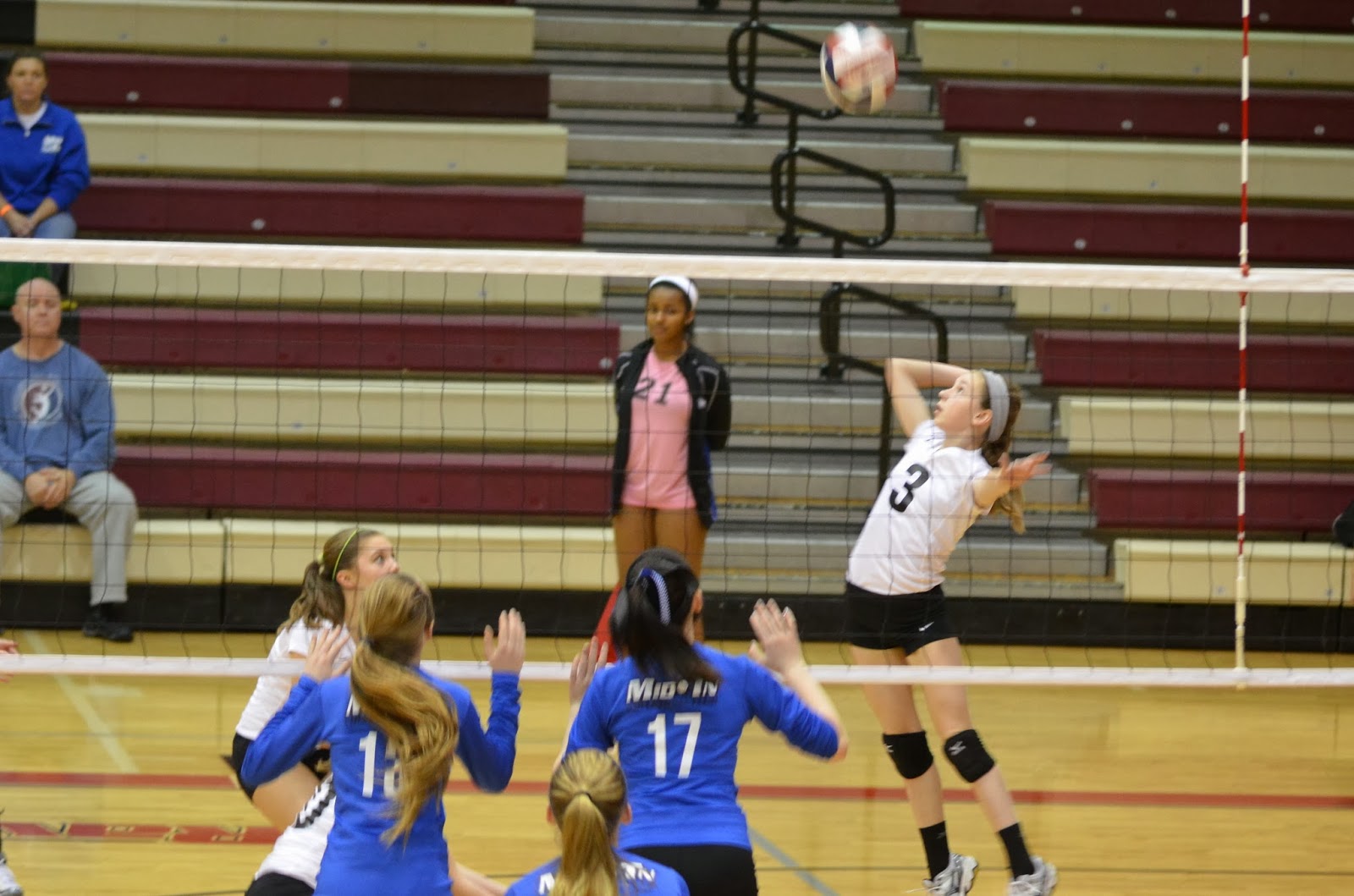
I would rather watch my daughter than Payton Manning any day. She was fun to watch. At five foot one, my daughter was the shortest outside hitter in the entire tournament, but she did great because she can jump. She also played middle back.




The Main Point

Total cost $1,150. 

I would do anything to watch my kids play the sports that they love to play. 

Thursday, September 27, 2012

Youth Sports: How to Get Great Action Photos

Do you want clean, crisp action shots with little or no blur in both indoor and outdoor settings like the images below?


First of all great shots start with the right equipment. Here is the camera that we use and I recommend.

Get a Nikon D7000 camera. It has a terrific processor, an expanded ISO range and shoots 6 images per second. You will pay a bit more for the 6 shots per second, but it is well worth it. The rapid shooting is important because it increases the chances of stopping the action at the right exact moment. My old camera, the Nikon D70s, only did 3 shots per second. I rarely got the exact moment that I wanted like the ball jumping off the bat or the soccer ball suspended right in front of the goalies awaiting hands. Bonus: The camera also takes great HD movies, so there is no need to carry a separate movie camera.

Here is the lens we use for indoor low light action shots to prevent motion blur. 

If your kid plays indoor sports like volleyball, basketball or hockey, and you want great picture you will need to invest in a good lens. I recommend the Tamron AF 70-200mm f/2.8 lens for indoor lower light action shots. You need an low f/stop (2.8 or lower) to eliminate the blur. Be prepared, to get a low f/stop you need to pay some money. This lens is $670. Tamron is a lower cost option than the Nikon lens which costs almost 2X. It was a smart buy and a great value. This lens works great outdoors too.

Here is the lens we use for well lit outdoor action shots

The Nikon 70-300 f/4 - 5.6 is ideal for action shots in higher light situations. We use this lens for our outdoor shots during soccer and baseball games. We like the added zoom that a 300mm lens gives. Soccer, lacrosse and football fields are long, so you will want the extra zoom that a 300mm lens gives. On bright days we do not need the f/2.8 lens, so we opt for longer lens with the higher f/4. By the way, a 300mm lens with a f/2.8 would be $5,000 (see link below). It is much cheaper to get the two lenses I recommend here than to invest in one $5000 lens, but knock yourself out if you do not want to deal with two lenses.

Here is the lens I use for close up shots.

We also use the f/3.5 18-105mm lens that came with the camera. We use the shorter lens to get close up shots. NOTE: It is tough to get the end of tournament team trophy shot with a telephoto lens because all of the other parents with point and shoot cameras get up close. You will not be able to get close with the longer lens, so you will have to wait until everyone is done and hope that the team stays still while the parents clear the way for your shot. As soon as the game is over, we switch to the shorter lens.

The Main Point

The money I spent on a great camera was worth every dollar. You cannot put a price tag on memories we captured. Buy the camera and the best lens or lenses to fit your needs and you will not regret it. I promise.


Sunday, June 10, 2012

Youth Golf Club Fitting: Sales Job or Con Job?

I went to get my son new golf clubs and I was talked into spending significantly more money than I had planned. Was this a great sales job or a con job? Perhaps the sales pro read about me in the first chapter of the book, "The Most Expensive Game in Town" What do you think?

My son is going to tryout for his high school team in August, so for his combined 8th grade graduation, Catholic Confirmation and 15th birthday, I took him out to get fitted for new golf clubs.

We went to the Golf Exchange because their TV commercial featured the latest computer technology for fitting golf clubs. After I saw the TV ad, I went to the website and noticed that Golf Exchange was a Golf Digest Top 100 Fitter, The Ping Fitter of the Year, a Mizuno Top 100 Fitter and the Callaway 2012 Fitter of the Year.

I was sufficiently convinced, so on my son's birthday, we went to the Golf Exchange to get my son fitted for new clubs. The pro immediately asked me a bunch of questions about my son's objectives, golfing history and swing. The pro then asked my son to hit his own 6 iron in the cage to get warmed up, while he fired up the computer to analyze my son's swing.

My son started hitting the ball and numbers jumped up onto a computer screen.

He than gave my son a club with some special impact indicating tape affixed to the club head. After each shot, the pro would read the tape and then remove the head of the club and replace it with another that connected at a slightly different angle. The pro would then again put indicating tape on the club head and hand the club to my son. This continued until the optimal club head angle was determined.

The pro then asked my son to hit his driver. After a few swings were recorded, the pro called over another sales associate and they started whispering back and forth. I edged closer to try to hear the conversation, but I could not hear it clearly.

I was curious, so I asked the pro if there was a problem. He told me that there was no problem with my son's swing, in fact your son's numbers are truly amazing. The problem is that your son's driver cannot keep up with his incredible swing and it might be difficult to analyze your son's "pro-like" swing inside.

He asked me how far my son hits his driver. I hesitated thinking that he would not believe me, then I told him that he hits between 250 and 310 and on occasion farther than that. My son is 5 ft 8 and weighs 120 pounds, so I was waiting for that look from the pro that says, "I think that you are exaggerating a bit about your son." Instead, he said, "I am not surprised with these numbers. In fact, he is losing distance because of the incredibly high backwards rotation he is generating with his current club." He then told me that the right shaft on the driver will control that spin better and your son will be hitting 310+ consistently instead of occasionally.

The pro then showed the numbers to another pro in the shop. This sales pro happened to be the JV coach of a local high school. The JV coach was also amazed by the numbers and told me that my son can be a special player - we don't see numbers like that from 15 year olds very often.

The Main Point

If the pros at Golf Exchange were feeding me BS to get me to spend more than I intended, then they are the greatest bunch of actors in the world.

I bought my son Ping I 20s and scheduled an outside fitting for a new set of woods too. When I got home, I looked up the swing statistics for pros and they did match my son's numbers. I also read some Ping research that shows proper golf club fitting does make a difference.

Why would I not want to give my son every advantage as he tries out for the golf team. I sucker is born every minute, but a natural golf swing is not. I guess I will find out over the next couple of years which is more accurate.

Wednesday, April 18, 2012

The Growing Youth Sports Economy - Is it Good or Bad for our Kids?

I spend a considerable amount on money on youth sports. Actually, one of the reasons I started this blog was to track how much I was spending. I didn't do this to live within a budget -- I had no intentions of spending less -- I was just curious. And I wanted to spark conversation with people who are equally enthusiastic or / and foolish.

My youth sports cost list has sparked many conversations, including one with Mark Hyman, sports journalist and author. In late 2010, Mark interviewed me for his second book on youth sports called, The Most Expensive Game in Town - The Rising Cost of Youth Sports and the Toll on Today's Families. I answered his questions, and to tell you the truth, I was a bit nervous about how I was going to be portrayed - our behavior regarding youth sports is not exactly rational.

The book was recently released and Mark sent me a copy. When the package arrived from Beacon Press, I hesitated. I didn't hesitate as long as I did before I opened my SAT scores, but it was close.

I finally opened the book and immediately went to the index to see if my name was mentioned in the book and on what page. To my surprise, I was mentioned on 6 pages, including page 1 of the book in the chapter called the Parent Trap. In this chapter, Mark told the stories of three families and also revealed that he was more like me than not.

The book explores so many interesting topics surrounding the economy of youth sports. Mark follows the dollars and explores the motivations of the people who spend their money on youth sports and the people who earn money from youth sports. He explores both sides of the financial equation in a respectful way while exposing some of his own misguided sports expenditures.

The book will make you think. And after you read the last page, you will close the book and wonder if kids would be better off without the influence of money.

In the book, you will find an interesting story about small money-strapped towns betting on youth sports meccas to bail them out of their financial woes. Mark also explores the influence of big corporation money from companies like ESPN, Gatorade, Nike and Pepsi. Stories about the Ford sponsored Punt Pass and Kick competition and the invention of the aluminum bat brought back memories for my wife and me. My athletic wife competed in the PP&K and I used a gold painted Worth metal bat in 1970, the year that it was introduced and changed youth baseball forever.

The Main Point

If you are involved in youth sports as a spender or someone who earns a living from youth sports, you will find this 145 page book a very interesting read. You can buy it directly from Amazon for $16.47

Here's why we spend on youth sports:

Many parents spend money on youth sports in hopes of giving their kids a chance to earn a scholarship or a pro contract. If this were our goal, then our expenditures on youth sports would be considered questionable. That is not our goal. My kids and I both know the slim to none chances of playing sports at advanced levels (college and pros). I write about this a lot in my blog.

Our goal is to have fun and learn what it takes to succeed in life. Sports teaches so many life lessons. (I write about this often too) At the end of their sports careers - whether it ends by getting cut by a HS coach or retiring from the pros after a successful career - I think that my kids will know how to set goals, work hard, work for demanding bosses, work with teammates, succeed under pressure, seek out experts for advice and persevere - lessons that will serve them well in life. 

Tuesday, March 20, 2012

Youth Sports: Strip Club Sponsors Local Little League

A struggling economy and over regulation has left a local little league's budget a little exposed. 

The budget strapped Lennox School District in California recently doubled field usage fees for a local baseball youth league. Rising maintenance costs and the need to provide security were cited as reasons.

They also banned the league from selling grilled food at the games. For years, the league had counted on sales of grilled food for revenue. The Lennox School District was concerned about public heath - actually they were concerned about financial liability. The Superintendent says that the school district cannot ensure that the league volunteers will handle and cook the food properly. The risk of punitive lawsuits to the school district outweighed the benefit.

These two moves put the season in jeopardy until the Jet Strip Gentleman's Club donated $1,200. Despite the dire situation and the club manager's assertion that the Jet Strip is community and family-oriented, the league returned the funds.

The season looked like it was going to be a big bust, until the publicity from the situation raised awareness of the league's plight.  Donations poured in from more appropriate sources and the season was saved.

This club donated the money without any G-strings attached. They did not demand a big promotional sign at the games. They did not ask for naming rights of the Field - Jet Strip Gentleman's Club Little League Park. Heck, they did not even ask if their girls could perform on the foul poles between innings. Several parents in the district did not mind that the money came from the strip club - money is money. What are your thoughts?


What about bars?

When my son was nine, his team played against a team sponsored by a local watering hole. Each kid on the tavern team donned a yellow shirt. They had their first names affixed on the back of the jersey over a large number. Emblazoned on the front of the jersey was Linda's Bar in classic baseball script writing. When I first saw the uniforms I wondered who in the world would put that on a little league jersey. Then I looked into the crowd and stopped wondering. 

I wrote about that night in my post called Cat Fight in the Stands. 

The Main Point

The world has tuned completely upside down when a strip club owner looks good and a school district looks bad. Somethings have not changed - strip clubs are recession proof, we need tort reform, US schools are a financial hot mess, sex sells and all PR is good PR.


Tuesday, March 6, 2012

Youth Sports: The Reality of NCAA Scholarships (Part 3)

All State in athletics + National Honors Society in academics = Acceptance into a great university and perhaps a scholarship

I always remind my kids that academic achievement is more important than athletic achievement. I tell them that participation in sports is fleeting, but knowledge will take them anywhere they want to go. Even if the place they want to go is to college to play sports. Ironic isn't.

There are two reasons why.

1) Athletic ability can open doors to great academic universities.  If your son or daughter has great grades and high ACT / SAT scores, his / her application will be considered by the admissions staff along with countless others just like it. Athletic ability can be the difference maker.  If a coach wants your son / daughter to play a particular sport for the school, they will lobby the admissions office to accept an athlete. Some good student athletes who could not get an athletic scholarship at a Division I school, may find a place on a roster and academic merit money at a Division III school. (Division III schools are not allowed to offer athletic scholarships)

2) Academic ability can open doors to NCAA locker rooms. In my recent post regarding the Reality of NCAA Scholarships (Part 1), I wrote about the limited number of scholarships for certain low revenue generating sports. For example, a women's soccer squad gets 12 scholarships for 28 roster spots. I explained that many collage coaches have to be creative with the limited scholarship dollars allocated to their program. They often split one scholarship 2 or more ways to attract as many impact players as possible. Great student-athletes can provide a coach another option. A friend of mine has a daughter who is a talented volleyball player. She was offered an athletic scholarship. The coach knew that his new recruit was a fantastic student with outstanding ACT scores, so he encouraged the recruit to apply for academic scholarships. She won an academic scholarship, so the coach was able to reallocate the athletic scholarship money to another player. So if two players competing for one roster spot are equal in ability, the coach will likely choose the player with the best chance to earn an academic scholarship.

The Main Point


Message to youth sports athletes: Study as much as you practice and you will be on a college court (field or pitch) before you know it.

My daughter CC playing during the
halftime of the Xavier Women's Basketball Game
#6 Xavier vs GW 2011

Tuesday, February 28, 2012

Youth Sports: The Reality of NCAA Scholarships (Part 2)

Crazy Youth Sports Parent, have you promised your little student-athlete a car if he or she gets a scholarship?


I called my sister on her cell phone the other day but she couldn't talk because she was at the car dealer buying a car for my nephew. She had promised him a new car if he ever got an athletic or academic scholarship. Well, he just got a football scholarship and a new car. My sister thought it was a small price to pay because the scholarship was saving the family $112,000 in tuition and fees. (Coastal Carolina University Out of State is approximately $28,000 per year for 4 years.) My dad had the same deal with me. (I did not earn a scholarship). I have the same deal with my kids.


This type of commitment may bite you in the ass. As you saw in the previous post - the average scholarship is only $10,000 per year. And if you read below, scholarships are not guaranteed. You can buy a car and still end up paying for school.


Misconception #3


All athletic scholarship are guaranteed for all four years. Actually, most scholarships are given for one academic year at a time and are offered with the expectation of renewal each year. The coach, however, has the option to renew, reduce or cancel at his/her discretion. The coach is required to send a written notification to each scholarship athlete on or before July 1 to offer a new scholarship or update the status of an existing scholarship as renewed, reduced or canceled. 


Once a scholarship is offered for an academic year, it can only be reduced or cancelled if 1) the athlete makes him or herself ineligible for NCAA competition by violating NCAA eligibility rules, 2) the information on applications or financial aid documents is discovered to be falsified, 3) the athlete violates school rules or 4) the athlete decides to quit the team. Athletic scholarships cannot be reduced or canceled during the year based an injury that prevents an athlete from participating or poor performance. Furthermore, scholarships cannot be increased in a given year for great performance either.


A new rule in 2012 has opened the door for 4 year guaranteed scholarships. The Big Ten schools and a few others are starting to offer these longer term deals for football only, the sport that make the most money for the school. Students like this because it protects them from losing a scholarship for poor performance on the field. Big Ten coaches currently like it because it provides them with a recruiting advantage. Smaller budget conference coaches hate it because it puts them at a disadvantage to recruit players. Some big money team coaches hate it too. They like the flexibility to cut players who are not earning their scholarships. Many programs over sign players. Which means they offer more scholarships than they have to ensure that they get enough new recruits. Well if too many accept the scholarships, the coach either cuts the recruit or cuts a current scholarship player. For more on the over sign issue, click on oversign.com. Most likely the 4 year guaranteed deals will be limited to the high revenue generating sports and all other scholarships will be 1 year renewable deals.


Most coaches will honor their commitment and renew a player's scholarship each year but scholarships are sometimes revoked or reduced.


Here are six situations that can derail a scholarship
  1. A school experiences budgets issues and cuts back on scholarships.
  2. A college drops the sports program. Some colleges will honor the scholarship, but if the sport was dropped for financial reasons the institute may not.
  3. A coach may revoke a scholarship if an athlete consistently fails to meet the minimum academic requirements. (Includes 4 year deals)
  4. A coach may revoke a scholarship if the athlete experiences drug or alcohol issues or violates other team rules.  (Includes 4 year deals)
  5. A coach can cut a scholarship player at the end of a year if he or she does not think that the

Sunday, February 26, 2012

Youth Sports: The Reality of NCAA Scholarships (Part 1)


My nephew just received a full ride to play football for Coastal Carolina. He scored 22 touchdowns in 11 games his senior year. The team’s previous record was 14. Still, my nephew was lucky to get a scholarship at all. He suffered an injury that cut his junior year short after a few games. The injury also significantly cut the number of calls he received from college football coaches and recruiters.
I learned a lot about the quest for a college scholarship from my sister. The biggest thing that I learned is that there are a lot of misconceptions regarding collage scholarships. Over the next couple of posts I will share the statistics and realities of NCAA college scholarships.
Misconception #1
All college athletic scholarships are full rides (4 years of free education plus room and board). Full ride scholarships make up a very small percentage of the scholarships granted. The average is actually about $10,000 per year, a small fraction of the $22,000 to $56,000 cost to go to school each year. Ironically, many youth sports parents spend $5,000 to $10,000 per year from age 11 to 18 preparing their young athlete for a scholarship. My message to you is, if you are investing money in youth sports for a potential NCAA scholarship you are misguided.
The reality is that outside of the money generating sports like football and basketball, full rides are rare. Many institutions simply cannot fully finance sports like soccer, baseball, bowling, golf, lacrosse, men's volleyball, softball, swimming, wrestling and track and field because these sports do not generate a lot of money from attendance and / or media contracts. Typically, women's volleyball players receive full ride scholarships.


The best chance for a full ride is in big money football and basketball. The NCAA allows 85 scholarships for football and 13 for basketball, enough to provide a full ride to every players and schools that generate a lot of money from these programs fully fund these scholarships. For comparison, a low money generating sport like men's soccer can only give 9.9 hardly enough for a squad that consists of about 28 players. Truth be told, many schools do not give the maximum number of scholarships allowed. To attract many quality players, one scholarship is often split and distributed among multiple athletes on a team. A one-year scholarship worth $50,000 is often distributed among 5+ athletes, each getting $10,000 or less per year. It's amount that satisfies a young athlete’s ego, but hardly covers the cost of going to school.
Misconception #2
Athletic scholarships are plentiful. That would be true if every Division I and II school offered the maximum amount of scholarships allowed by the NCAA. (Scholarships are highly regulated by the NCAA.) Here is the reality, only Division I and Division II schools can offer scholarships and the number of scholarships per sport per school is fixed. For example, baseball is only allowed to distribute 11.7 for the entire team each year. A college baseball team typically carries 36 players on a roster.
While the NCAA edict sets a maximum number allowed,  each college can determine how many scholarships they are going to give out based on their own principles and economics. Some schools DI and D2 schools do not offer any athletic scholarships at all. Ivy League teams and the military academies do not offer any athletic scholarships. Others offer some financial assistance through athletic scholarships, but simply cannot afford to offer the maximum number of scholarships.
Here is the hard cold truth - The number of athletes playing with a scholarship full or otherwise is about 140,000. Men’s and women’s hockey has the highest scholarship average per athlete $20,000 per year which is almost 4 times more than the average baseball players pull in.
The chart below indicates how many scholarships are available for reach sport.
The Main Point
Keep pumping money into a 529 college savings plan. Your kid has a 3-5% chance of playing a sport in college and the chances of getting a significant amount of money to play that sport is slim to none. 

Division I                                     Max             Men's            Max        Women's
                                                      #                Teams             #              Teams
                                                   Scholar-                            Scholar- 
                                                    Ships                                  Ships                                     


Baseball /Softball 11.7 291 12 283
Basketball 13 340 15 338
Track & Field 12.6 276 18 316
Football 85 242 0 0
Golf 4.5 290 6 252
Gymnastics 6.3 16 12 61
Field Hockey 0 0 12 77
Ice Hockey 18 34 18 24
Lacrosse 12.6 57 12 90
Rowing 0 0 20 86
Soccer 9.9 197 12 314
Swimming / Diving 9.9 134 8.1 193
Tennis 4.5 258 8 317
Volleyball 4.5 22 12 323
Wrestling 9.9 71 0 0


Division II                                   


Baseball /Softball 9 266 7.2 287
Basketball 10 310 10 312
Track & Field 12.69 184 12.69 201
Football 36 169 0 0
Golf 3.6 233 5.4 170
Gymnastics 5.4 0 6 9
Field Hockey 0 0 6.3 29
Ice Hockey 13.5 24 18 9
Lacrosse 10.8 48 9.9 68
Soccer 9 204 9.9 256
Swimming / Diving 0 70 9 89
Tennis 4.5 178 6 239
Volleyball 4.5 16 8 300
Wrestling 9 61 0 2


Saturday, November 19, 2011

Youth Baseball: Budget Planning for a Select Season

How much does it cost to run a select (travel) baseball team?

This is the time of year that an organzied select baseball coach will put together a budget for the spring season. If you are a coach, this post will help you think about your budget.

This budget is based on a 12 player team with a 65 game schedule.

Uniforms

Hats (2 colors)                                 24                        $15                   $ 360
Socks (2 pairs Home and Away)     48                        $  4                   $ 192
Jerseys (Home and Away)              24                        $40                   $ 960
Jerseys (Coaches)                           6                         $40                   $ 240
Pull Overs (Players & Coaches)     30                         $20                   $ 600
Pants (Home and Away)                24                         $30                   $ 720
Helmets (Batting)                           12                         $25                   $ 300
Helmets* (Pitching)                        12                        $25                    $ 300
Equip Bag (Reg)                            10                         $40                   $ 400
Equip Bag (Catchers)                      2                          $55                   $ 110
Equip Bag (Team)                           2                          $55                   $ 110
Shipping                                                                                               $ 225
Sub Total                                                                                           $ 4,517

* Highly Recommended

Equipment

Game Balls (Dozen)                     6                             $40                   $ 240
Practice Balls (Bucket)                 1                            $100                   $ 100
Scorebooks                                   3                          $  10                   $   30
Medical Bag                                 1                           $ 200                  $ 200
Other Gear (L Screen, etc)           1                          $ 300                  $ 300
Sub Total                                                                                             $ 870

Field / Facility Rentals     

Winter Indoor                               1                          $1000                $1,000
Home Games                              15                         $    45                $  675
Practice Field                                1                         $  500                 $  500
Sub Total                                                                                           $1,175

Assumes 15 home games. Tournament game field fees are included in the tournament fees.

Umpire Fees

Assignment Fee                           1                          $   25                 $     25
Scheduling Fee                            1                          $ 100                 $   100
Game Fees*                                25                         $    55                $1,375
Sub Total                                                                                           $1,500

* Umpire Fees for regular season games only. Tournament game umpire fees are included in the tournament fees. 

Tournaments / League / Admin

Season Tournaments                     8                          $500                $4,000
League Tournament                      1                          $500                 $   500
State Tournament                          1                          $750                $   750
National Tournament                    1                          $750                 $   750
Team Sanction Fee                       1                          $  50                $     50
Insurance                                      1                          $ 100                $   100
League Fees                                 1                          $ 500               $   500
Misc (Admin, party, etc.)             1                          $ 500                 $   500
Sub Total                                                                                           $7,150

Grand Total                                                                                     $15,212

Cost Per Player                                                                                  $1,267

The Main Point


A well thought-out budget in the pre-season helps a coach avoid surprise charges during the season and allows the players' parents to budget their money for this somewhat expensive sport.

Note - this budget was built for 12 players - Communicate to the parents that if someone decides to quit and not pay - the other players will need to pick up the difference. As a coach you do not want to get caught making up for short falls in the budget. Believe me it happens all the time. It is better to ask for more money upfront from each player and then refund it, then it is to end up short. For the budget above, I would charge each player a flat $1,350.


Monday, October 10, 2011

Youth Sports: Expensive Shoes Obsession


Is your young athlete obsessed with expensive athletic shoes? Do you let him or her buy expensive shoes? Do you pay for them? If you do why? If you don't why? 

Share your point of view with me and my readers.

My son is obsessed with basketball shoes, baseball cleats and golf spikes.

My 14 year old son, Nic, is only 5' 6" but he has size 11.5 feet. I always tell him that one day he is going to be a big strong athlete or a short clown. Those constantly growing feet have cost me a lot of money over the years because every sports season since he was 5 and I have had to purchase him new athletic shoes. That's what dads do. Another thing dads do is put a reasonable budget on each shoe purchase and I have always done that.

Apparently in this Facebook super transparent world, the shoes still make the man.

My son likes to stand out. That's a problem when you play a team sport with uniforms. However, the one element of a uniform that Nic can control in most cases is his shoes. He uses his choice of shoes to make himself standout. Shoes have become a part of his identity and a reflection of his "full of life" personality. As such, he is currently obsessed with basketball shoes, baseball cleats and golf shoes. 

Over the last 6 months, Nic has purchased five pairs of basketball shoes for a combined total of about $550. You'll notice from my Youth Sports Costs list that only one is listed. I agreed to pay a portion ($80) of the only pair of these shoes (the white retro Jordans) that qualified as school shoes under his school's strict uniform policy. 

You are probably wondering how he buys his shoes if I don't buy them for him. Well, Nic is a hard worker. He mows lawns and watches a neighbor boy periodically to earn money to support his obsession with shoes. I keep telling him to put the money in his car fund (which I match dollar for dollar), but I guess shoes today are more important than a car tomorrow. I constantly remind him that his shoes will get him from point A to point B just like a car, but it's really tough to take a girl to the movies when the only mode of transportation you have is a pair of Pink Nike HyperDunks. I guess saving for the future is a lesson that he needs to learn the hard way though experience.

Here is a list of shoes he has purchased most recently to stand out. He also has purchased a matching headband for each pair.

Nike KD III Christmas Edition  (Yellow) KD is for Kevin Durant
Nike AirMax Flight 11 Reke Havoc (Purple) Tyreke Evans
Nike Zoom Kobe IV (Camo in Blue and Black) Kobe Bryant
Nike Jordan 5 V Retro Independance Day (White) Michael Jordan
Nike Hyper Dunk 2011 (Pink)

He bought these shoes online or at his favorite store the House of Hoops. The House of Hoops is a store within a store at select Footlocker locations. The closest one to our house is 100 miles away in Columbus. Fortunately for my son, we are in Columbus for soccer, baseball and basketball tournaments every other month. 


Nic was inspired to purchase the pink pair by watching the NFL breast cancer awareness campaign. During the month of October, the NFL players and coaches are raising awareness for breast cancer by donning pink (gloves, hats, shoes, sweatbands, etc.) for the A Crucial Catch Pink Campaign. 

The Main Point

You'd have to be crazy to buy multiple pairs of basketball shoes totaling $550 for feet that may still be growing. I'm not crazy, but my son apparently is and so are some of his friends. 

I am not really happy about his choice to spend money in what I think is a frivolous manner, but I also think that a person who works hard and earns his or her own money should be free to buy whatever they want to buy (as long as it is legal). I believe in limited government and freedom, so it's against my principles to mandate how my son spends his hard earned money or what color shoes he can and cannot wear.  It would take away all of his motivation to work. 

My wife and I have taught our son that you need to work hard to get the things you want in life. He has learned this lesson loud and clear. I hope that our message regarding the importance of saving money for the future is being heard too and that one day he will put it into practice.

What is your stance on expensive sneakers?

Wednesday, May 11, 2011

Youth Sports : How to Save Money

Karen Datko, a writer for MSN Money, recently quoted this site in an article called The High cost of Youths Sports. MSN Money also linked to a post that I wrote for Coachhub.com called How to Save Money on Youth Sports.


The Main Point

As of today the 131 day for the year, we have spent $4750 dollars on youth sports ($36/day). We use a some of the tips that I outlined in the links above to save money, else the total would be higher. I thought that I would share my learnings with you.

Friday, December 3, 2010

Youth Sports: Sports Training for Babies and Toddlers?

CC Age 3
On Wednesday, The New York Times featured an article called Sports Training Has Begun for Babies and Toddlers. Apparently formalized sports training cannot start early enough and entrepreneurs are cashing in on it. It's big business.

Crazy Youth Sports Parents Series

One company featured in the article is called Gymtrix. They sell videos to help kids get a fast start on their athletic coordination development. According to Gymtrix
"Something magical happens when kids learn how to throw, catch, kick, run, leap and twist. They get up and join in the game! GYMTRIX™ motivates kids to try new experiences and discover how it feels to succeed; it gives them a positive attitude about physical activity that can influence their whole lives."
I couldn't agree more, but do parents need a video to achieve this? What's next an iPhone App to teach your baby how to walk?

If you want your kid to throw, catch, kick, run, leap, twist or even hit a golf ball. Just Do It! Get away from the TV, the BluRay Player, the Wii and go outside and do it.

The one thing that I do agree with is that many kids can learn sports mechanics at a young age. It's remarkable what some kids if you just show them what to do.
Nic Age 3

Speaking of big business. In Cincinnati, there is a awesome indoor sports facility called Kids First. It's a sports training facility for younger kids. This place is crowded seemingly 24/7. They have swimming, gymnastics, volleyball, cheering, dance, soccer and basketball programs that cater to younger kids. For example, the 10 week, $152 Tumble Bee class is designed for 10-18 month old kids. $108 will get your kid some soccer and basketball training starting at the tender age of 3 year olds. Truth be told, my wife and I have spent lots of time and money in this place.


The Main Point


Your kid will be an good athlete if they are athletic. And it will not make any difference if they start training at 6 mos or 6 years. If you have the money and you want to see your kid run around an indoor soccer field with a bunch of other kids great. We enjoyed it, but we did not think that it was essential step in a quest for a college scholarship and you shouldn't either.


Monday, November 22, 2010

Youth Baseball: Select Baseball Costs Uniformly High?

During my interview with Mark Hyman, professional journalist and blogger (Youth Sports Parents), we talked about the cost of youth sports. Mark was looking for interesting or questionable costs associated with youth sports? I told him about the uniforms that my son donned as a 10 year old baseball player.

The U10 team Nic played on had four different color hats (cardinal, blue, gold and white), two different color pants (white and grey), three different jerseys (cardinal, blue and gold), two vest options (white and grey),  and two stirrup sock options (blue and cardinal). The jerseys were worn under the vests or without the vests. All of the uniform parts were designed to work with all the others. If my math is correct, there were 144 possible combinations. This includes wearing white pants with grey vests and vice versa which you would not expect, but the team actually wore these hideous combination once or twice. The team only played 50 games that year, so I figured that 144 uniform combinations would satisfy the questionable cost category.

Grey Pants / Cardinal Jersey
White Pants / Blue Jersey
White Pants / Gold Jersey
Grey Pants / Grey Vest
White Pants / White Vest
Cardinal Hat
White Hat
Gold Hat 
Blue Hat
Blue Stirrups
Cardinal Stirrups
The Main Point

Some teams get a bit carried away with uniforms and spirit wear. This can unnecessarily drive up the cost of youth sports for parents.

Followers

LinkWithin

Related Posts with Thumbnails