Showing posts with label Baseball Equipment. Show all posts

Tuesday, September 11, 2012

Youth Baseball: Pitchers Should Wear Helmets

Oakland A's pitcher Brandon McCarthy was hit in the head by a line drive. The blow to the head instantly dropped him to the ground. He was able to get up and walk off the field, but he suffered a epidural hemorrhage, a brain contusion and a fracture skull that required a two hour surgery.

Brandon McCarthy was lucky, he was released from the hospital today.

There have been kids that were not so lucky. Seemingly, every year kids die.  I have written about this subject several times in the past.

Here is the deal. It is quite simple. The powers that control little league baseball have already mandated BBCOR bats to protect pitchers. Now they need to mandate helmets for pitchers.

All pitchers should wear helmets. I wish MLB would mandate it. The MLB makes first base coaches wear helmets, so it can be done. MLB should decree it to protect big league players. More importantly, the MLB should decree it to set an example for little league, HS, College and minor league players.

At the very least, I would love to see a prominent MLB pitcher wear a helmet to show kids that it is not uncool.


The Main Point

Parents do not need to wait until the MLB mandates the use of helmets. They should talk to their kid's coach and make it a requirement for pitching. My son didn't pitch much, but when he did, he wore a helmet. When my son was younger, his coach made everyone wear them. His coach did this because one of his players almost died from a line drive to the head. Almost 5 years later, that player still struggles with the debilitating affects of the injury. My son knows the kid very well, so it does not take any effort to get my son to wear a helmet when he is pitching.

Buy a helmet from the link below.


Wednesday, September 28, 2011

Youth Baseball: BBCOR Bats for Christmas?


My son wants a new BBCOR bat for this fall ball season and for next spring. I told him we are going to wait until our league officially announces the BBCOR bat mandate. 

My other reason is that it saves me money to give it to him as a Christmas present instead of a random purchase. (Dad secret.)


Before you buy - read this post and check out the BBCOR comparison app by baseball express.


Here is a well written email from my son's baseball coach to the team regarding BBCOR bats and the lower expectations in terms of batting statistics associated with them. 

2012 BATS:

At the league meeting on Saturday, we’ll be discussing the BBCOR bat issue.  I am not 100% certain at this point what the league is going to do, but wanted to give you a heads up on the issue.

The new BBCOR standard measures bat performance and replaces the previous BESR (Ball Exit Speed Ratio) standard.  The NCAA required BBCOR baseball bats for the 2011 season.  For NFHS (National Federation of High Schools), all bats must be BBCOR certified for the 2012 season. I expect the league to follow the NFHS for 13U and up at a minimum. 

BBCOR stands for Batted Ball Coefficient of Restitution (What?).  Simply put, it’s a measurement of the LOSS of energy for both the ball and the bat at impact.  Instead of measuring the speed of the ball after it is batted (BESR and the current standard), BBCOR measures the “trampoline” effect on BOTH the ball and the bat.  A PITCHED ball holds a lot of energy, with wood bats much of that energy is lost as the ball compresses on impact with a dense surface.    With hollow-core aluminum or composite bats (most of our current bats) the thin walls flex which distorts the ball less therefore the ball retains more of its original PITCHED energy plus gains the power of the bat’s speed and the bat’s flexibility.  The less energy lost from the pitched ball, the faster the BATTED will be launched off the bat - therefore non-wood bats hit balls FASTER than wood bats.


Why not just go to wood?  Money.  The expense would increase annual operating costs significantly – especially for a 24+ man high school or 35 man NCAA rosters.

The bottom line – new bats under the Christmas tree will have to carry the BBCOR stamp on the bat and may be inspected by umps this year.

LOWER YOUR EXPECTATIONS

The bat you put under the tree will have less hits in it

From the NCAA: 
Division I batting average, scoring and home runs per game in 2011 resemble the wood-bat 1970 era.
Division I teams in 2011 averaged 5.58 runs per game, well off the record 7.12 in 1998.
Home runs left parks at an average of .52 per team per game in 2011 compared with .94 last year and 1.06 in 1998 (also the peak year for that category). That resembles wood-bat days, too (.42) 
Batting average in 2011 was .282, the lowest since 1976.
Note - earned-run average, on the other hand, was its best (4.70) since 1980 (4.59).

The Main Point

The new bats will be much safer. And I believe that the games will be more enjoyable (See post about a great wood bat tournament). The 20-19 three hour games will be replaced with 3-2 nail biters. Pitching, bunting and fielding will become much more important. Baseball will be baseball again and I welcome the change.

Friday, July 8, 2011

Youth Baseball: Nike Swingman Cleats Product Alert

U13 baseball is the first year that metal spikes are allowed. (I debated the metal vs molded plastic cleats for U13 in two posts Metal or Molded Plastic Cleats, What to do?)

My son was very excited to buy his first pair of metal cleats. We went to Dick's Sporting Goods and bought the Nike Swingman Cleats in blue and black, his team colors. Two of his 9 other teammates also bought Nike Swingman cleats. The Nike Swingman Cleats are the most comfortable cleats he has ever had. He has not complained of foot or heal pain all year.

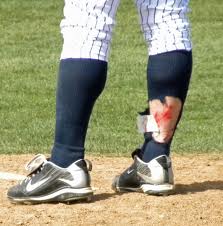
The only complaint he has is that the strap on his left shoe did not last the entire season. Before game 45 of the season, the ankle strap buckle broke off. The same buckle broke off the cleats of one of his teammates just a few games before his broke. To me this indicates a manufacturer design flaw. High end Nike cleats should last the entire season if not longer.

Perhaps we should have known that these shoes would not be durable because Ken Griffey Jr was pitching them. He never lasted an entire season when he was in Cincinnati either.

Left cleat strap buckle broke. Athletic tape secures it now.

Right cleat strap buckle broke. Athletic tape secures it now.
The Main Point

Nike Swingman shoes might have a design flaw. Buy and use with caution.

Side note to coaches: This was also the first year that my son was allowed to select his own cleats. His previous team issued cleats as part of the uniform. For the last 4 years, my son has worn cheap cleats that were not exactly comfortable for his wide feet. Foot comfort is more important than everyone wearing matching shoes. One type of shoe or even brand does not fit all. Give your kids the freedom to select shoes that are comfortable.

Sunday, May 8, 2011

Youth Baseball: Metal or Molded Plastic Cleats What to do? (Part 2)

On January 3rd, I wrote a post questioning metal cleats for 13 year old baseball players. I enumerated the risks involved.
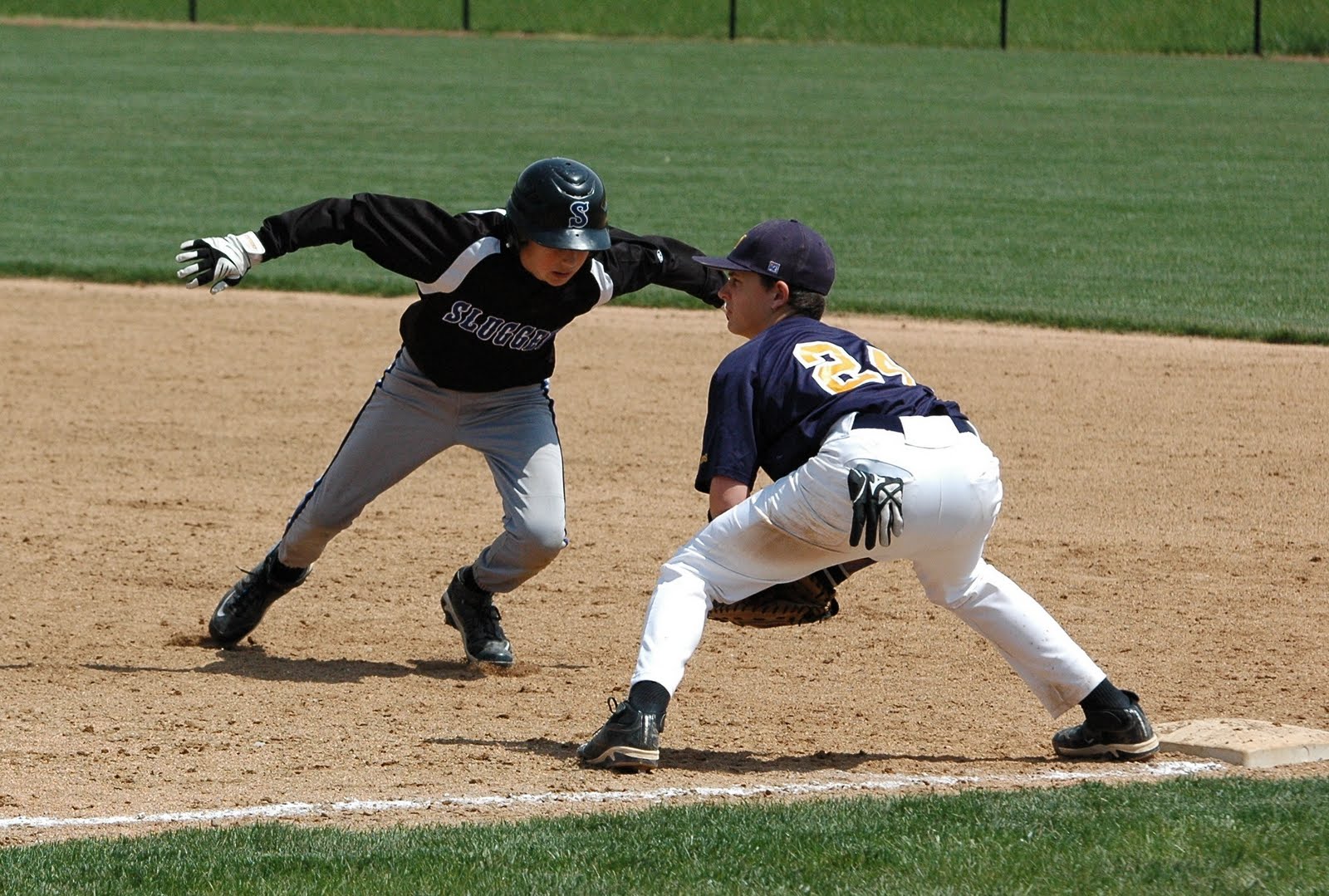
Injury Risk Number Two - Getting Cleated by your opponent - One of the most common "metal cleat injuries" occurs when a base runner slides into a base and spikes the fielder. As the runner slides the cleats are exposed toward the fielder's glove, leg or foot. Of course a runner sliding head first can get his hand stepped on by a fielder with metal cleats.
During the first game of the doubleheader on Saturday, my son Nic was diving back into first base when the first baseman stepped on his hand. The metal cleat lacerated the webbing between his pinkie and ring finger and cut the fleshy part of the side of the hand above the pinkie.


Nic was playing catcher in the game so the coach used a courtesy runner to allow Nic to go to the dugout without officially leaving the game. In the dugout, the team mom cleaned up the wounds and determined that the cuts would not need stitches. His hand was swollen and he had trouble closing his hand at first, but he had time to ice it before his next at bat. I was making plans in my mind to go to the urgent care to get the hand x-rayed,  while his coach was trying to figure out how to adjust his defensive game plan. Nic's turn to bat came up and he was determined to give it a go. Nic hit a double over the right fielders head. We all figured he was going to be ok. He also played the second game of the doubleheader and had 2 more hit.


At night, we watched Celtics Rajon Rando dislocate his elbow, go into the locker room for treatment and then return to lead the Celtic's in a win over the Lebron James, Dwayne Wade Heat. 


The Main Point

I still question whether the extra traction worth it. My son thinks that it is worth it for the cool factor alone. He loves his Nike Swingman cleats. 


And he got a big smile on his face when I compared his situation to the Rondo injury and return.


Wednesday, April 27, 2011

Youth Sports Fanatics by Nature or Nurture? (Part 2)

In November, I was interviewed by Mark Hyman, professional journalist and blogger (Youth Sports Blog) about youth sports. He asked about our obsession with youth sports. 


I told him that we're a sports family. My wife and I both come from sports families. Read Youth Sports Fanatics by Nature or Nurture? for the long history. We love sports and either by nature or nurture our kids love sports too. None of us can get enough of sports.


Here is more proof that nature might have something to do with it. I was talking to my wife's grandfather Leroy, who is 97, he told us that his father was an athlete. In fact, his father, my son's great great grand father, played professional baseball in the Mississippi Valley league in the early 1900's. Leroy told us that could have advanced further in the sport, but his parents forbade him from playing on Sundays. 


Fred Sherman Whannel - Catcher - 1910 (Left)


The Main Point


What makes this nature or nurture debate even more interesting is that my son is a catcher and his grand father (My dad) was a college catcher and based on the picture above, my son's great great grandfather was a catcher too. (Check out the glove of the player on the left above - compare the glove in the picture to these historical gloves.)


Nic - Catcher - 2010

Monday, March 7, 2011

Youth Baseball: New Prototype Helmet to Protect Pitchers Unveiled

A new prototype helmet designed to protect pitchers on the mound from head injuries was unveiled today by Easton-Bell sports. (Read about the Easton-Bell Baseball Helmets here)

As you know I am a very big supporter of pitchers wearing helmets. I have blogged about it often.

Read Safety Equipment for Youth Baseball

Read Youth Baseball: Game Starts and Ends with a Prayer.

Read Youth Baseball: Wanted MLB Pitcher to Wear a Helmet on the Mound 

The Main Point

I applaud the efforts of Easton-Bell to protect pitchers. Easton-Bell is a great company with lots of credibility so I trust that they have designed a helmet that works well. Still, from the photo of the prototype I am skeptical. A kid from my hometown was seriously injured by a line drive that hit on the top of his head as he tried to duck out of the way. Judging from the picture alone, this helmet does not seem to protect the top of the skull. Also, this looks cool, but until an MLB player wears one and makes it vogue I fear that no one will use them. Easton-Bell I hope that you can get Phillies pitcher Roy Halladay to wear your new helmet.

Until this helmet is available, my son and his teammates will be wearing All-Star catchers helmets. 

Sunday, February 27, 2011

Youth Baseball: Buying a Glove for a Select Player

My son, Nic, needed a new baseball fielding glove for the 2011 season. Over the past few of weeks, I did the research on how to buy a glove for a serious teenage player. I hope you can learn from my work.

Background

Before you buy a glove you need to assess the situation. Here is our situation.

My son, Nic, signed with a new select baseball team. Like his old team, this new team plays at the highest division of youth baseball in the area.

My son had been the primary catcher for his old team for the last 3 seasons. His new baseball team has 3 other catchers, so he will not be need to catch 70-80% of the innings anymore. We are thrilled because catching can take a toll on a player. We also happy because we think that young players (6-14) should play / learn multiple positions.

At this point, we're not sure which position will be his secondary position to catching. This uncertainty makes buying a fielder's glove more difficult because there are different glove designs for different positions.

Nic is hoping to play infield but outfield is a possibility too. As such, he needs a versatile glove that will be his gamer through high school regardless of position. Nic is in 7th grade.

The sites researched

There's a lot of information on the internet regarding this topic. I visited many sites, some were good and some were bad.

ehow - How to buy a baseball glove This site was light on information and expertise. A waste of time.
Dick's Sporting Goods - Buyer's guide - How to buy a glove This guide was comprehensive but did not offer a strong recommendation for or against specific brands.
BaseballGloves.com - This is a comprehensive site with information and links to every major and niche brand.
Wilson.com baseball glove selector tool. Wilson makes great gloves but their baseball website is terrible. I am sure that they are losing business because their site is so poorly architected and the content is so poorly written.
High School Baseball Web. This is the best site I found for very specific information and expert advice.

This is the info that we took with us to the sporting goods store after I did the reseach:

Position - Not sure - infield (not first base) or outfield.
Size: 11.75 is the most versatile size for multiple positions.
Material: Leather - the better the leather the better the glove. I wanted a glove with top quality leather that would last.
Color: Personal preference - my son likes black.
Web: We decided on the trapeze web or H web.  Both versatile web choices.
Brand: Wilson. Nic has a great Wilson A2000 Showcase catcher's mitt. He received a free Wilson A2000 Showcase catcher's mitt for participating in consumer research for Wilson. He is loyal to Wilson.
Price Range: $150 - $200

The stores we shopped

We did not consider online stores. A player needs to try gloves on to get the best fit. Even two of the same model gloves do not feel exactly the same.

We went to Dick's Sporting Goods, our typical go to place for sports equipment. The particular store we went to was sold out of the top quality gloves. They had 100's of gloves for younger little league players, but only had 1 top quality glove. That one glove was not the size nor the brand we wanted. The clerk told us that they were expecting a large delivery the next day. We returned the following week. The Wilson A2000 and A2K glove bins were still empty. Dick's lost a sale.

Subsequently, we went to specialty sporting goods store in Cincinnati called Koch's Sporting Goods. They have a nice selection of top end gloves for the same price at Dick's Sporting Goods. They also provided expert advice that confirmed all of our research and gave us peace of mind.

The Glove we bought


We bought the Wilson A2000 Limited Edition Black Out (A2000LE 1796). It is a 11.75in glove with a trapeze web for $249. 


Note: Wilson makes the same glove for $199 called the A2000 1796 - The difference a yellow W and yellow A2000 markings. Unfortunately they were sold out of the $199 model. I was tired of driving around looking for gloves, so I spent the extra $49 for the Black Out. Wilson made 500 of these gloves. My son has glove number 132 of 500. Nic loves being unique so he his thrilled. He calls his new gamer the black stealth mamba.  


Preparing the Glove for Play


Baseball Glove Steamer
Have you ever heard of steaming a glove?

The specialty sporting goods store clerk steamed the glove in a Mizuno steamer. They sprayed the glove with what looked like a water and soap solution and placed the glove in the steamer for 2 minutes.

After they steamed the glove, they beat the glove with a wooden mallet to soften the leather and form the pocket. The glove was nearly game ready after this treatment.

The clerk / baseball equipment expert told me to put a very light coating of Vaseline on it inside and out in about a week to treat the leather and help break it in.

The Main Point

1) Assess the situation - your son's age, skill level, commitment level, position, etc.
2) Assess your budget.
3) Do your homework.
4) Go to the store and try the gloves on for fit and comfort.

Wednesday, February 2, 2011

Youth Baseball: Read This Before You Buy a Composite Bat

Babe Ruth Baseball ages 13-15 and 16-18 and Cal Ripken Division ball ages 4-12 have approved a moratorium on the use of composite bats effective immediately for the 2011 season. The decision is based on a study conducted by UMass-Lowell that determined some composite bats, after a break-in process, can exceed an acceptable bat performance factor (BPF) after a break-in process. What does this mean? It means that some bats test within the acceptable limits when new, but over time the bat exceeds the BPF. This of course translates to harder hit balls and a reduction in reaction time for defensive players. 


Some composite bats do qualify so you need to know which ones to buy. I would recommend that you talk to your coach before you make the investment in a new bat.


Read about the Babe Ruth rule changes here. 


Here is a list of approved bats for ages 13-18. 


Here is a list of approved bats for ages 4-12


NOTE: The moratorium on composite bats only applies to composite barreled bats. Bats with a composite handle and metal/alloy barrels only are not subject to the moratorium. 


The Main Point


I have seen, first hand, the devastation that a batted ball can do to a pitcher. I fully endorse restrictions on bats and a mandate for all pitchers to wear protective helmets.

Sunday, January 30, 2011

Youth Baseball: Metal or Molded Plastic Cleats What to do?

My son is starting his U13 baseball this year. U13 is the first year that the AABC league allows metal cleats. I know that metal cleats offer much better traction on both hard and soft dirt fields and on the grass outfields and infields, but is it worth the potential risks?


My son wants to get metal cleats and I suppose that I will allow him to do so. I have expressed my concerns and I have shared with him the risks. Like most decisions, I will allow him to make his own educated decisions.


Injury Risk Number One - Cleating yourself -  and perhaps one of the most annoying things that I remember from wearing metal baseball cleats when I was young - cleating yourself. I remember the pain of the metal cleat hitting my own ankle. This is more of an annoyance than anything.


Injury Risk Number Two - Getting Cleated by your opponent - One of the most common "metal cleat injuries" occurs when a base runner slides into a base and spikes the fielder. As the runner slides the cleats are exposed toward the fielder's glove, leg or foot. Of course a runner sliding head first can get his hand stepped on by a fielder with metal cleats.


Injury Risk Number Three - Too much traction - Players prefer metal cleats because they provide superior traction, however too much traction at the wrong time can result in a serious knee or ankle injury. In the game of baseball quick changes of direction happen all the time. 


(Example One) Aggressive players always look to turn a single into a double by hustling down to first and taking an aggressive turn after a hit to the outfield. If the outfielder bobbles the ball they are ready to take advantage, but if the player fields the ball clean and comes up throwing, the runner quickly reverses direction. If the runner's metal cleats dig in deep as the player is turning, a player can damage knee or ankle ligaments. This is exactly how I blow out my ACL playing men's fast-pitch softball. And I was wearing plastic molded cleats. 


(Example Two) I have also seen catchers hurt their knees blocking the plate. As the catcher gets the ball, he is suppose to position his left foot on the baseline facing third base, but many put their left foot perpendicular to the line to block more of the plate. A foot anchored in metal cleats at  an improper angle could increase the likelihood of knee and ankle injuries during a play at the plate. (See Baseball-Catcher.com for proper positioning advice)

The Main Point


Is the extra traction worth it? I am not sure that it is for 13 year old baseball players. What do you think? 

We are thinking about getting my son the New Balance baseball cleats which come in wide sizes and are suppose to be one of the most comfortable baseball cleats on the market. 

Feb 20th update:
My son ended up buying the Nike Swingman metal baseball cleats. He also bought the Ignite II Under Armour baseball turf shoes.


Tuesday, May 25, 2010

Youth Baseball: Bats, Wood or Aluminum?

In 1924, a patent was issued for the first metal baseball bat, but metal bats were not used until Worth introduced the first aluminum baseball bat in 1970. I was a little league player in the early 70's and I vividly remember when kids around the league started to use them. By the mid 70's every team had at least one aluminum bat for players to share.

Metal bats became very popular when Easton introduced a better and stronger aluminum bat in the late 70's. That is when I got my first aluminum bat. I remember it like it was yesterday, it was gold with black letters. When the bat met the ball it sounded different, but I don't really remember it changing the game significantly for me.

Innovations continued as bat manufacturers realized there was a market for $300+ bats. In the early 1990's lighter and stronger bats made of titanium were introduced. Then bats with double wall construction and high tech composite materials were introduced. All of the innovations were designed to propel the ball faster and further. Of course parents anxious to see their kids succeed or at a minimum keep up with the Jones' keep buying the best and most expensive bats on the market. And the crack of the bat was forever replaced by the ping of a bat.

I didn't realize it until this past weekend, but baseball lost something in the process.

Arguments for high tech metal or composite bats
  • Better weight distribution with a center of gravity closer to the handle to make it easier to swing. 
  • Greater bat speed potential leads to more power to hit the ball harder, faster and further.
  • The Trampoline effect - the bat compresses on impact and then springs back pushing the ball forward.
  • Bigger sweet spot which is much more forgiving translates to more hits.
  • More durable - aluminum bats do not break as easy as wood.
  • Cost efficient. Metal or Composite bats can be much more expensive to buy compared to wood bats, but cost savings can be realized over time because they are more durable.
Arguments against high tech metal or composite bats
  • Greater bat speed potential leads to more power to hit the ball harder and faster and this puts the pitcher and other players in jeopardy of serious injury. Kids are getting seriously injured and even killed by batted balls that rocket off of the high tech bats.
  • Bigger sweet spot which is much more forgiving leads to more hits even against nasty pitches. There are lots of rules in place to limit the number of pitches a pitcher can throw in a week, a game or a tournament. These rules are in place to protect young arms. If wood bats were used, there would be less cheap hits and therefore less pitches required to get through an inning or game. Wood bats would save young arms.
  • Defense becomes more important. Games with wood bats are decided more on skill and less on technology. 
  • Strategy becomes important again. Manufacturing runs with bunts and "hit and run" plays become more viable options. Kids therefore learn the game more completely. 

The Main Point

After watching a wood bat tournament this past weekend, I have become a big fan of wood bats. A game played with wooden bats is pure baseball. It is baseball at its very best.

Games 52, 53, 54, 55

I just watched a great wood bat tournament this past weekend. It was baseball at its best. The eight best teams from the tri-state area converged to match skills not technology.

My son's team won 4-3 in extra innings, lost 1-0 in extra innings, won 7-6 in extra innings and then lost in the semi-finals. Pitchers pitched and fielders made plays. There were very few cheap hits. There were more bunts and situational hitting. It was really fun to watch.

Ironically enough, my son who has been in a prolonged slump hit a pop up 15 feet beyond second base. The second baseman got a late jump. The shortstop got a late jump and the centerfielder did not get a good read. As a result, the ball dropped in for a cheap hit. My son hustled right out of the box and slid into second base with a double. His coach didn't say a word about his hustle. The opposing coach yelled at his players, he said, "If you guys hustled half as much as that kid he would be out and not on second base. Nice hustle kid." Despite the long slump he continues to play with passion and I am proud of him.

The 1-0 loss was against our arch rival, the team that denied us a CABA World Series Championship by beating us in the finals 2 years ago. In the second inning, my son was up with a runner on third. His coach called for a suicide squeeze. My son put a perfect bunt down the first base line. The run scored and my son was safe at first with a single and an RBI, or so we thought.  The umpire called the ball foul. He claimed that he saw the ball hit my son's foot. I have video of the play and the ball was no where close to his foot. Nic's team would have won in regulation 1-0, but instead lost the game in extra innings 1-0. That is how it goes when a player is in a slump.

My son caught both games of the doubleheader on Saturday and the semi-final game on Sunday. He played flawlessly and threw out another base stealer. One of the dads from our team came up to me and said how impressed he is with Nic. Namely, that he does not take his hitting slump into the field with him.

I bought my son a Mad Dog bamboo bat prior to the tournament. My son loved it. Mad Dog Bats


Thursday, April 15, 2010

Buying Your Kid's First Baseball Glove. Make it Memorable.

My daughter's coach will not let my daughter play with her current glove because it is too small. So we she needed to get her a new glove.

My wife took my daughter to Dick's Sporting Goods. If you want to know the truth, I was kind of bummed about this. I consider baseball glove buying a dad thing. I was so excited when I brought my oldest son to buy his first glove and I also vividly remember the first glove buying experience with my other kids. It is not that my wife cannot pick out the right glove. It has nothing to do with gender. I fondly remember when my dad took me to buy my first Rawlings glove. When my kids remember back, I selfishly want to be a part of the memory.

My daughter tried on every glove in the store. She settled on a black and pink Mizuno glove for $35. She needs to use the glove immediately, so the new glove had to be pre-broken it. This glove fit perfectly, was very soft and pliable, was the right color and was only $35. We will buy her a good glove when she is fully grown. I will review the glove in a few weeks in the comment section.

The Main Point

The experience of buying your kid's first baseball glove may be a life long memory for you and your kid. Take your time and make it more than a transaction, make it an experience.


Here is the info on the glove from Mizuno

Perform at your best with the exceptional Mizuno® 11.5" Finch Pink Prospect glove. The superior design features multiple technologies to have the advantage in the game. Mizuno's® exclusive ParaShock™ palm pad absorbs the shock of repeated use providing outstanding protection and ideal comfort. The Power Close® makes it easier for younger players to close the glove and catch the ball.

Features


  • 11.5" fastpitch pattern
  • Diagonal Tartan Web
  • Double hinge heel creates a larger pocket
  • Power Lock™ closure provides the quickest and most secure fit available
  • Surefit™ foam adds cushioning along the back of the fingers for a more customized fit
  • Double Hinge Heel™ design creates an extra wide pocket for a secure catch
  • V-Flex Notch™ helps initiate easy closure

Tuesday, April 6, 2010

New Catchers Equipment

Last year,  Wilson Sporting Goods conducted consumer research for a new line of gloves in their legendary A2000 line. The gloves they were testing were designed for younger players with smaller hands. Wilson recruited a bunch of kids to test the glove out in practice and game situations. Wilson selected my son to participate in the test.

We were sent a A2403 SC-DPCM 32 1/2" A2000 Catcher's mitt.

My son was asked to create a video showing himself breaking the glove in, practicing with it, using it in games and answering a series of questions about the glove. He had been using a Rawling's Glove that was too big for him. 

Here are the details of the glove they sent my son.


Wilson A2000 Showcase A2403 SC-DPCM 32.5 Inch Catchers Mitt
  • Designed for players with smaller hands. Now players of all ages can have a professional quality glove designed to maximize their performance
  • 32.5 Inch Catcher Pattern
  • Half Moon Web
  • Extra deep pocket
  • Designed for an easier closure
A2000 Showcase Features:

  • Narrower hand opening for more secure fit
  • Elongated lace holes reduce resistance to glove closure
  • Narrower pinkie and thumb for better control
  • Narrower and shorter finger stalls for more control
  • Palm Pad for hand protection
  • Sloped opening above knuckle bridge for a more secure fit
  • Rolled welting provides shape for the life to the glove, but allows for a quicker break in versus traditional welting styles
  • Softer feel
  • Same size pocket as A2000 patterns
  • Pro Stock Leather - Made from the finest American Steerhides
  • Dri-Lex Technology - Ultra-breathable wrist lining that transfers moisture from the skin, keeping you hand cool and dry
The Glove retails for about $199

My son's product review

My son loves the glove. It was very easy to break in. In fact, he was using it in games a week after he received the glove. The glove fits great. His glove reacts to all his movements because it fits so well. He says the fast balls does not sting him as much with this glove. He loves the sound of the pop it makes when the ball hits the pocket. That sound makes fast balls seem a faster and that intimidates hitters. He says that the ball always finds the pocket and stays secure. He loves the way the ball is always in the same spot in the glove - finding the ball quickly is important because every split second counts when you are trying to throw out a base stealer. He also feels that the ball stays more secure during tough tag plays at the plate compared to his old glove. There is nothing worse that putting your body on the line to block the plate and apply a tag only to have the ball pop out.
My son did everything that Wilson asked of him and for his efforts, Wilson sent him a CF4 Demarini Youth Baseball Bat. It is a big barrel bat 30 inches and 22 oz. I will get his review of this bat after he has 10 to 20 ABs with it. I can tell you the ball jumps off the bat in batting practice. The 30 in / 22oz bat retails for about $249


Followers

LinkWithin

Related Posts with Thumbnails