Showing posts with label Protective Sports Equipment. Show all posts

Wednesday, July 25, 2012

Youth Soccer: How to Maintain Goalie Gloves


One of the worst smells in youth sports comes from soccer goalie gloves. Those small pair of gloves pack a powerful punch of aroma. They do not stink to the legendary smelly status of hockey equipment, but they can certainly make a car, locker, gym bag, garage, mudroom or bedroom smell petty bad.

Here are tips that I read about goalie gloves to improve performance of the gloves, help reduce the stink and prolong the life of the gloves.

1) Before each game and practice moisten the palm of the glove with water. The added moisture will make the glove more tactile and reduce the chances of cracking. It is also a good idea to moisten the palms again at the end of halftime.

2) After each game or practice allow the gloves to dry out completely in a well ventilated area to prevent dry rot. Opening the gloves helps dry out the gloves. One tip I read suggested putting the gloves over a discarded cardboard toilet paper towel roll. This will let the air flow into the glove to help dry the inside too and the cardboard will absorb some of the moisture. Do not put the gloves in a clothes drier, over a heating vent or in direct sunlight because quick drying can cause cracking.

3) Washing the gloves occasionally is recommended. Removing the dirt from the palm and fingers will increase the tactile performance of the glove and help prolong the life of the glove. Several of the goalie glove manufacturers sell mild, low foaming goalie glove wash. I have read that shampoo works just as well. Either way make sure you get the suds completely out. It is also recommended that you clean the velco strap by picking out the dirt and lint. After you clean the gloves, make sure that you allow them to dry out like in point 2.

4) Some goalies keep the little bag that the gloves came in. After the game or practice they put the gloves in the bag to keep the gloves away from dirty cleats, to keep the smelly gloves away from clothes and to keep the stench out of the car on the way home. When they get home, they take the gloves out and allow the gloves to dry out properly.

The Main Point

Following these procedures will prolong the life of the gloves, allow the gloves to work at peak performance and reduce the smell.

Will my daughter do any of this?

Maybe after the first game or practice.

Monday, July 23, 2012

Youth Soccer: Selecting Goalie Gloves

My daughter and I took our annual trip to the soccer specialty store to buy goalie gloves. This trip is  necessary every year because pre-teen girls grow out of gloves quickly, goalie gloves do not really last that long and old goalie gloves smell something awful.

My daughter is the full-time starting goalie for an outstanding U12 team. The team plays in a regional league and top tournaments. It's some serious soccer, so I wanted to get her some serious gloves. Before we went to the store, I learned the following about gloves.

Gloves are the single most important piece of equipment that a goalkeeper needs. Some rec level younger kids play without them, but serious goalies would never play do that.

So how do you select goalie gloves:

There are many factors to consider:

1) Level of play - How serious a goalie is your kid? If your kid is a full-time goalie playing against top talent, then invest in gloves that will protect him or her and give them the edge to make difficult saves. Spend between $50 to $150. If your kid is younger (U10 and under) or plays at a rec level or is a part-time goalie on a club team, find a decent pair of gloves for $20 to $30. I bought gloves at the lower end of the high quality spectrum for my U12 player.

2) Number of games - How many games will your kid be playing in the next year. The more expensive gloves will last longer than the cheaper gloves. So if your kid is playing 2-3 games per week year round, it might make more sense to purchase higher quality gloves. My daughter plays 60 games per year. I figured this warranted higher quality gloves.

3) Number of practices - If the team your kid plays on practices all the time and plays a lot of games, you might want to purchase high quality game gloves and lower quality practice gloves. My daughter will use her slightly worn and small gloves from last year for practice.

4) The size - Comfort is the most important factor. Find a glove that protects but does not restrict. Properly fitting gloves is key. Goalie gloves come in sizes 4 to 12. You can use trial and error to determine the correct size at a store, If you are buying on-line, you can measure the circumference of your palm just below the fingers, exclude your thumb. Add one 1" to the measurement and round up to the next whole number. That will give you your glove size. It is not a perfect system because some manufacturers gloves run small and others a little bigger. Regardless, goalkeeper gloves should be worn slightly big. The fingers should extend about a 1/4 to 1/2 inch over the tips of your fingers. My daughter bought size 7 gloves.


5) The Conditions - Gloves are made of various combinations of latex / foam / rubber. Some are made for all weather, some for wet weather and others for hard surface / turf. The softer gloves provide more grip and control but do not last as long. Less soft, more durable materials are for goalies who play on hard ground or turf. Note: the wet surface gloves are hot and slippery when used in dry weather. I also learned about under-glove gloves for keepers allergic to latex. My daughter selected an all weather glove. If she advances to HS or College, perhaps we would buy more than one pair of gloves so she can use the optimal glove for the conditions.


6) The Features - My daughter had her hand stepped on last year. She was not hurt, so she was convinced that the reinforced finger spines were the reason. She wanted gloves with finger spines again this year. Ventilation, range of motion, wrist closures, wrist protection options, color etc. are all personal preference features. My daughter did not like the color of the gloves she selected, but she chose comfort over color. 


7) The Comfort - The most important determining factor is comfort. That is why, I would rather purchase goalkeeper gloves in a specialty soccer store with a large selection. There are some great eretailer selling gloves if you like to shop on line - just make sure you pick a retailer with a customer-friendly return policy.


The Main Point


My daughter selected the Reusch Keon Plus Finger Support Goalkeeping glove. The cost was $54 + tax.

Monday, October 3, 2011

Youth Sports: Playing with Braces

And One
My daughter, CC, got braces last Tuesday morning. Last Tuesday night she had a basketball game and about 30 minutes into the game she got her first bloody lip from the braces. 


During the ride home from the game, she asked me to take her to Dick's Sporting Goods to get her a mouth guard. 


This is not the first time we bought CC a mouth guard. If you recall from my March 15, 2011 post called Youth Sports: Mouth Guards Recommended, I bought my daughter a mouth guard during the AAU basketball season. It just was not comfortable and no one else on the team was wearing one, so she never got into the habit of wearing it. That $20 mouth guard is collecting dust somewhere.


While writing that post, I learned a lot about the benefits of mouth guards. Benefits that I did not know about. (Read the post, it has lots of good information and links). After that post, I have been alerted to many more sports tragedies regarding concussions. Tragedies that might have been prevented to reduced with the use of a properly fitted mouth guard.


One ESPN article about a scappy women's soccer player called Heading For Trouble, by Peter Keating caught my attention because my daughter is a small scrappy player like the women in the story. In this article I learned about the prevalence of concussions in women's sports especially basketball. 
In sports played by both women and men, women sustain more concussions. The girls' concussion rate in high school soccer is 68% higher than for boys. And it's nearly triple the boys' rate in high school basketball, according to research by scientists at Ohio State, Nationwide Children's Hospital in Columbus, Ohio, and the NCAA. 
My daughter plays soccer and basketball so, I intend to help my daughter make wearing a mouth guard a habit.


We purchased a Shock Doctor Mouth Guard developed specifically for use with braces. My daughter wore it last night. She is still getting used to breathing and talking with it, but she kept it in the entire game last night. It didn't seem to impact her performance. She led all scorers with 8 points including a key 15 foot baseline jumper with less than a minute left to give our team a two possession lead in a game we won 25-20.


The Main Point


Mouth Guards are not that fashionable and are not that comfortable at first, but I urge all parents to get their kids who play soccer, basketball, lacrosse, ice hockey, field hockey and football to get into the habit of wearing a mouth guard. The guard can help prevent lacerations, fractures, dislocations, broken teeth and concussions*.


* According to Shock Doctor, when there is an impact to the jaw or mouth, the mouthguard absorbs and redistributes the force of the blow more evenly, which can help lessen the severity of an impact and even help keep the force of an impact from moving to the brain.

Wednesday, September 28, 2011

Youth Baseball: BBCOR Bats for Christmas?


My son wants a new BBCOR bat for this fall ball season and for next spring. I told him we are going to wait until our league officially announces the BBCOR bat mandate. 

My other reason is that it saves me money to give it to him as a Christmas present instead of a random purchase. (Dad secret.)


Before you buy - read this post and check out the BBCOR comparison app by baseball express.


Here is a well written email from my son's baseball coach to the team regarding BBCOR bats and the lower expectations in terms of batting statistics associated with them. 

2012 BATS:

At the league meeting on Saturday, we’ll be discussing the BBCOR bat issue.  I am not 100% certain at this point what the league is going to do, but wanted to give you a heads up on the issue.

The new BBCOR standard measures bat performance and replaces the previous BESR (Ball Exit Speed Ratio) standard.  The NCAA required BBCOR baseball bats for the 2011 season.  For NFHS (National Federation of High Schools), all bats must be BBCOR certified for the 2012 season. I expect the league to follow the NFHS for 13U and up at a minimum. 

BBCOR stands for Batted Ball Coefficient of Restitution (What?).  Simply put, it’s a measurement of the LOSS of energy for both the ball and the bat at impact.  Instead of measuring the speed of the ball after it is batted (BESR and the current standard), BBCOR measures the “trampoline” effect on BOTH the ball and the bat.  A PITCHED ball holds a lot of energy, with wood bats much of that energy is lost as the ball compresses on impact with a dense surface.    With hollow-core aluminum or composite bats (most of our current bats) the thin walls flex which distorts the ball less therefore the ball retains more of its original PITCHED energy plus gains the power of the bat’s speed and the bat’s flexibility.  The less energy lost from the pitched ball, the faster the BATTED will be launched off the bat - therefore non-wood bats hit balls FASTER than wood bats.


Why not just go to wood?  Money.  The expense would increase annual operating costs significantly – especially for a 24+ man high school or 35 man NCAA rosters.

The bottom line – new bats under the Christmas tree will have to carry the BBCOR stamp on the bat and may be inspected by umps this year.

LOWER YOUR EXPECTATIONS

The bat you put under the tree will have less hits in it

From the NCAA: 
Division I batting average, scoring and home runs per game in 2011 resemble the wood-bat 1970 era.
Division I teams in 2011 averaged 5.58 runs per game, well off the record 7.12 in 1998.
Home runs left parks at an average of .52 per team per game in 2011 compared with .94 last year and 1.06 in 1998 (also the peak year for that category). That resembles wood-bat days, too (.42) 
Batting average in 2011 was .282, the lowest since 1976.
Note - earned-run average, on the other hand, was its best (4.70) since 1980 (4.59).

The Main Point

The new bats will be much safer. And I believe that the games will be more enjoyable (See post about a great wood bat tournament). The 20-19 three hour games will be replaced with 3-2 nail biters. Pitching, bunting and fielding will become much more important. Baseball will be baseball again and I welcome the change.

Tuesday, March 15, 2011

Youth Sports: Mouth Guards Are Recommended

My daughter is average height for a 4th grader, but considered short when she is on the basketball court playing with amazingly tall 4th grader AAU ballers. Her face is often at the height of swinging elbows which puts her at risk of bloody lips and lost teeth.


There is a great post on www.girlsplaysports.com called Mouth Guards are a Must... It is a must read of parents of all athletes boys and girls.

The Main Point

I need to get my daughter to wear a mouth guard. She has had 2 bloody lips since the AAU season started 3 months ago. Luckily she has not lost any teeth. She has also taken a charge and fell back and hit her head. Read Youth Basketball: Busted Lip

According to the post on www.GirlsplaySports.com mouth guards are proven to reduce the risk of concussions too.

I have seen some kids wear mouth guards for basketball and soccer. I would guess about 2 out of 10 at the most. If my daughter started wearing one, she be the only one on her current basketball team wearing one. No one on her soccer team wears one this year either, although two girls did last year.

She is proud and will resist wearing a mouth piece until someone else wears one. She will need to convince her best friend to do it with her.

Monday, March 7, 2011

Youth Baseball: New Prototype Helmet to Protect Pitchers Unveiled

A new prototype helmet designed to protect pitchers on the mound from head injuries was unveiled today by Easton-Bell sports. (Read about the Easton-Bell Baseball Helmets here)

As you know I am a very big supporter of pitchers wearing helmets. I have blogged about it often.

Read Safety Equipment for Youth Baseball

Read Youth Baseball: Game Starts and Ends with a Prayer.

Read Youth Baseball: Wanted MLB Pitcher to Wear a Helmet on the Mound 

The Main Point

I applaud the efforts of Easton-Bell to protect pitchers. Easton-Bell is a great company with lots of credibility so I trust that they have designed a helmet that works well. Still, from the photo of the prototype I am skeptical. A kid from my hometown was seriously injured by a line drive that hit on the top of his head as he tried to duck out of the way. Judging from the picture alone, this helmet does not seem to protect the top of the skull. Also, this looks cool, but until an MLB player wears one and makes it vogue I fear that no one will use them. Easton-Bell I hope that you can get Phillies pitcher Roy Halladay to wear your new helmet.

Until this helmet is available, my son and his teammates will be wearing All-Star catchers helmets. 

Wednesday, February 2, 2011

Youth Baseball: Read This Before You Buy a Composite Bat

Babe Ruth Baseball ages 13-15 and 16-18 and Cal Ripken Division ball ages 4-12 have approved a moratorium on the use of composite bats effective immediately for the 2011 season. The decision is based on a study conducted by UMass-Lowell that determined some composite bats, after a break-in process, can exceed an acceptable bat performance factor (BPF) after a break-in process. What does this mean? It means that some bats test within the acceptable limits when new, but over time the bat exceeds the BPF. This of course translates to harder hit balls and a reduction in reaction time for defensive players. 


Some composite bats do qualify so you need to know which ones to buy. I would recommend that you talk to your coach before you make the investment in a new bat.


Read about the Babe Ruth rule changes here. 


Here is a list of approved bats for ages 13-18. 


Here is a list of approved bats for ages 4-12


NOTE: The moratorium on composite bats only applies to composite barreled bats. Bats with a composite handle and metal/alloy barrels only are not subject to the moratorium. 


The Main Point


I have seen, first hand, the devastation that a batted ball can do to a pitcher. I fully endorse restrictions on bats and a mandate for all pitchers to wear protective helmets.

Thursday, December 9, 2010

Youth Sports: Raising Awareness of Sports Injuries (Part 3)

I love sports stats, but there is nothing to like about the stats that are posted on the Sports Safety Alliance Website. 


The Sports Safety Alliance believes that there is a rising safety crisis in America. The number of league sports and community opportunities to play athletics is on the rise and so are the injuries. If the posts in this blog about the now 180 games played and countless practices, 1 MRI and 2 X-rays over the last 10 months is not convincing enough check out the sample of the stats from the Sports Safety Alliance site.


The sports safety crisis is evidenced by:
  • There were 120 sports-related deaths in 2008-2009, in 33 states.
  • Approximately 8,000 children are treated in emergency rooms EACH DAY for sports-related injuries.
  • 50% of “second impact syndrome” incidents – brain injury caused from a premature return to activity after suffering initial injury (concussion) – result in death.
  • The CDC reports that high school athletes suffer 2 million injuries, 500,000 doctor visits, and 30,000 hospitalizations each year. 
  • Female high school soccer athletes suffer almost 40% more concussions than males (29,000 annually).
  • Female high school basketball players suffer 240% more concussions than males (13,000 annually).
  • 400,000 brain injuries (concussions) occurred in high school athletics during the 2008-09 school year.
  • 62% of organized sports-related injuries occur during practices.

The Main Point

The main point comes directly from the Sports Safety Alliance website in their CALL to ACTION.
  • Ensure that youth athletes have access to health care professionals who are qualified to make assessments and decisions.
  • Educate your family about the symptoms of musculoskeletal and neurological injuries (concussion, heat illness, ACL injuries).
  • Ensure pre-participation physicals before play begins.
  • Ensure sports equipment and field are checked for safety and best conditions.
  • Write to your state legislator, expressing your concerns.
  • Support further research into youth sports injuries and their effects.
  • There’s a difference between pain and injury – work to eliminate the culture of “playing through pain” without assessment.


Wednesday, December 8, 2010

Youth Sports: Raising Awareness of Sports Injuries (Part 2)

My son has a heart condition. My son is a catcher. So when I read about the tragic dealth of a 16 year old all star catcher named Tommy Adams it really hit home. Tommy Adams was hit in his chest by a baseball. He went into cardiac arrest and died.  Surprisingly, he was wearing his protective catching equipment at the time of the incident. Commotio cordis was the cause. Catch the CBS Story about Tommy Adams' Commotio Cordis here.
Commotio cordis occurs when the heart beat is disrupted by a sudden blow to the chest directly over the heart at a critical time during the heart beat cycle. Believe it or not, studies show that a baseball traveling as slow as 35 miles per hour can cause this. Commotio cordis occurs mostly in boys with an average age of 15 during sports. Baseball is the most common sport associated with this medical condition. The fatality rate is about 65%. 
There is an organization, the Youth Sports Safety Alliance, that is trying to prevent tragic deaths and injuries in sports. They held a summit in Washington DC this past week. One of the main topics discussed was sudden cardiac arrest. They are calling for more highly trained trainers at athletic events including practices. They are also advocating that AEDs (Automated External Defibrillators) are available at all practices and games. Commotio Cordis can sometimes be reversed by defibrillation.


This video by Dr. Jared C. LaCorte M.D., Pediatric Cardiology Fellowship: Children's Hospital of New York-Columbia Presbyterian explains Commotio Cordis. He also advocates for AEDs at sporing events.


The Main Point


In this blog, I have advocated for the use protective equipement including baseball infielder's / pitcher's helmets and McDavid heart protection shirts. I will continue to use this forum to raise awareness of sports injuries and prevention. 


Tuesday, December 7, 2010

Youth Sports: Raising Awareness of Sports Injuries (Part 1)

This week, the Sports Safety Alliance held its second annual conference to raise awareness of sports injuries and suggest preventative solutions. The agenda included:
  • Sudden Cardiac Arrest 
  • Heat Illness 
  • Brain Injury/Concussion 
  • Sickle Cell Trait 
The video below is featured on their website. It's a video presentation with 73 slides. Each slide contains the names of two kids who died during sports events between 2008 and 2009.
The Main Point

Sadly, some of these tragedies could have been prevented. The Sports Safety Alliance is working to reduce the number of injuries and fatalities. I applaud their efforts.

Monday, June 7, 2010

Youth Baseball: Wanted a MLB Pitcher to Wear a Helmet on the Mound

I have written several posts regarding head injuries to pitchers and in each post I have strongly advised parents to insist on protective head gear for their young pitchers.

According to insurance statistics, on average one baseball player out of 50,000 suffers a significant injury to head or face. Here is a link to a must read article on Yahoo.com, called Pitcher head injuries to trigger cry for protection, which explores head injuries of baseball pitchers and use of protective head gear. It suggests that a movement has been started and manufactures of protective equipment are trying to develop products that will gain acceptance.

What the movement needs is a Major League Baseball pitcher to don a helmet on the mound. Youth baseball, HS and College pitchers know that protective helmets will help protect them, but they will not wear them because they look dorky.

The Yahoo.com article suggests that MLB players wearing protective head gear is unthinkable
Doing so is unthinkable in the pro ranks but is slowly gaining acceptance at the grass-roots level. 
Why is it unthinkable? Troy Tulowitzki is growing a mullet to raise money for a Children's Hospital and Special Olympics. What is more uncool, a mullet on a MLB All Star shortstop or a protective helmet on a pitcher?


The Main Point 

We need a successful MLB player with some name recognition to don a helmet on the mound and make a statement to all little league players that safety is paramount.

Sunday, May 30, 2010

Youth Baseball: Pain and Suffering of Catching

The baseball season grinds on and an injury to my son reminds me of my youth.

Game 59

I watched the game from the stands with the mother of a son who was seriously injured by a line drive last year. While my son is working hard to overcome a prolonged slump, her son is working hard to walk normally again.

In the first inning, my son threw out another base stealer, his 10th of the year. He looked at me with pride in his eyes. In the second inning, a foul ball hit the bottom of his All Star Catching mask. I guess the mask was not fully secure because the mask turned upon impact and the ball got hit my son in the throat. My son fell to the ground immediately and was struggling to breathe. The coaching staff ran onto the field to tend to my son. The mother of the injured player yelled for me to call 911, she  knows that time is critical with serious injuries. I took out my iphone ready to dial.

I asked the coach if I needed to make the call. He held up his hand telling me to wait. I had a flash back to my high school lacrosse days.

I cut toward the goal, the center middie threw me a perfect pass. I caught the ball and was immediately decked with a cross check to my throat. My feet continued forward as my head hit the ground. I remember staring up at the clouds while grasping for air as panic set in. 

My son started to calm down and breathe normally. His neck hurt for a few days, but it turns out that like my situation, the panic was worse than the pain.

The Main Point

Committed dads feel all the frustrations, the joy and the pain that their kids experience in sports. Try to limit the pain by making sure that your kids sports equipment fits properly and is in good working condition.

Saturday, May 15, 2010

Youth Baseball: Another Tragedy

On Saturday May 8th, a 13-year-old St. Regis Falls Central School baseball player died. The boy, Brady Lee Frazier died five days after he was hospitalized with a head injury suffered while playing baseball with the school's modified team. The eighth-grade pitcher was hit in the head by a line drive during a practice session.

I have been blogging since March and this is the third story that I have reported. Last year one of my friends son's was seriously injured by a line drive while pitching. So I have to ask this question.

How many more kids need to die or be mamed before helmets are required for pitchers?


The Main Point

No governing body seems to be establishing safety rules, but coaches can certainly mandate that their players must wear fielding helmets. 

Thursday, April 22, 2010

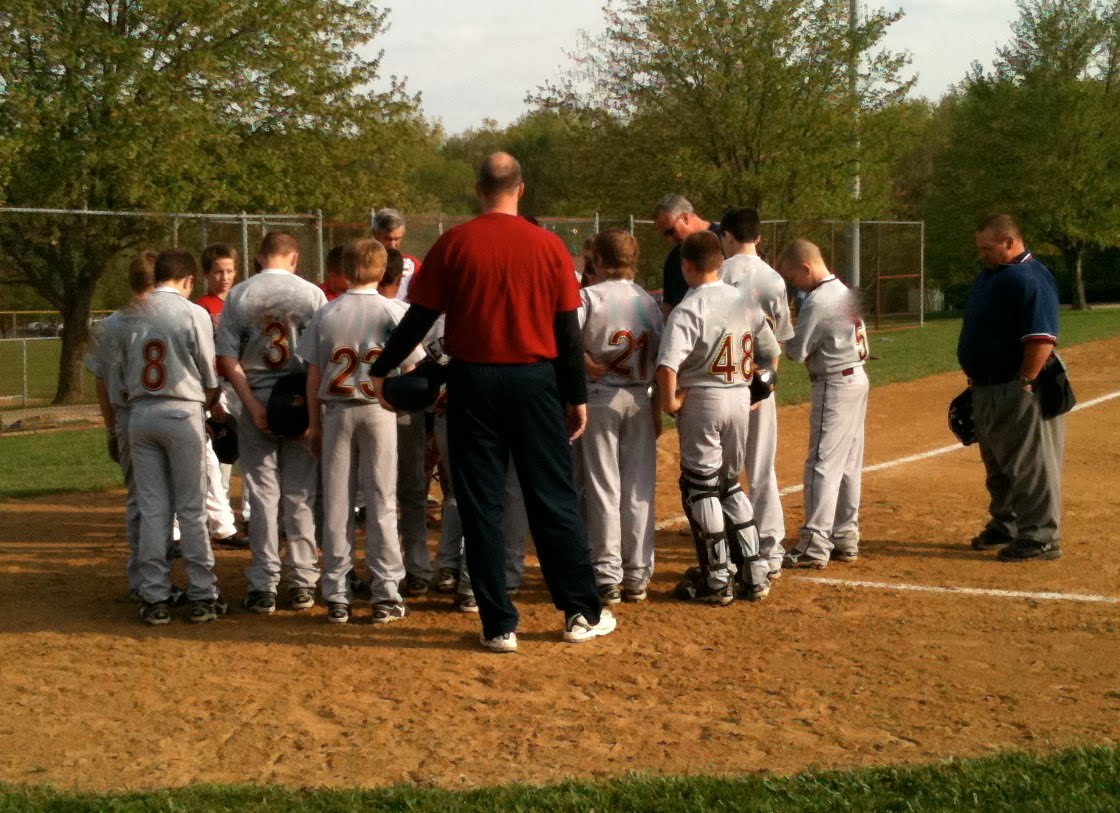
Youth Baseball: Game Starts with a Prayer, Ends with a Prayer.

Game 24

My son's baseball team started the game with a prayer for a local pitcher who was seriously injured when he was hit on the head by a line drive last week. (Link to news video below)

These injuries are becoming more and more prevalent as the technology of the super bats increases. There are two solutions to the problem. 1) Ban the bats or 2) Mandate use of fielders helmets. My son's entire baseball team wears All Star Fielding Helmets.

My son's team lost this game 19 to 18. They blew a 17 to 8 lead. It was warm and sunny when the game started, it was freezing cold by the last inning at 9:30. My hands were so cold that I had a tough time keeping score. It was not a league game so win or lose, I prayed to God that the game would not go extra innings.

Local Boy Hit in Head With Baseball is Recovering


The Main Point

All baseball pitchers from the little leagues to the Major Leagues should wear helmets. 1st and 3rd baseman should probably wear helmets. After the death of a minor league first base coach, the MLB mandates that all Major and Minor League 1st and 3rd base coaches wear helmets. Pitchers are much closer to the action than baseline coaches.

Youth baseball coaches wake up and mandate fielding helmets for pitchers at a minimum. Better yet, send a message that you believe in safety, have the entire team wear helmets in the field. You know what would be really cool. If a prominent MLB pitcher started wearing a helmet to start the conversation.

Saturday, March 20, 2010

Safety Equipment for Youth Baseball

My son's coach just handed out McDavid shirts. I had never heard of McDavid before today. They make performance and protective apparel. These undershirts have some high tech honeycomb padding on the chest that is designed to protect the heart. They call it Hexpad technology. Each year you read about a young pitcher who died of cardiac arrest after getting hit on the chest with a line drive. This product is suppose to reduce the impact of a baseball.

My son was born with transposition of the great arteries. He had open heart surgery when he was 4 days old. As such, heart problems are always on our minds. We are thankful that our coach is mandating the use of these protective shirts.

Our coach is also mandating the use of All Star fielding helmets. Every couple of years you read about a young pitcher getting hit on the head with a line drive. A 14 year old boy who plays in the same organization as my son was hit in the head last year. He almost died on the field, was in a coma for several days and is now working hard to get back on a baseball field again. He has a long, long journey.

I expect some heckling from uneducated teams and fans when they see our kids wearing fielding helmets - ala John Olerud (Mets, Blue Jays, Yankees, Red Sox, Mariners). John Olerud suffered a brain aneurysm in college. He wore a protective helmet in the field after that.

I hope our boys stand proud and start a movement.

Video - Pitcher Injured in NY

Followers

LinkWithin

Related Posts with Thumbnails