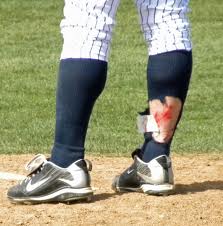
Sunday, February 27, 2011

Youth Baseball: Buying a Glove for a Select Player

My son, Nic, needed a new baseball fielding glove for the 2011 season. Over the past few of weeks, I did the research on how to buy a glove for a serious teenage player. I hope you can learn from my work.

Background

Before you buy a glove you need to assess the situation. Here is our situation.

My son, Nic, signed with a new select baseball team. Like his old team, this new team plays at the highest division of youth baseball in the area.

My son had been the primary catcher for his old team for the last 3 seasons. His new baseball team has 3 other catchers, so he will not be need to catch 70-80% of the innings anymore. We are thrilled because catching can take a toll on a player. We also happy because we think that young players (6-14) should play / learn multiple positions.

At this point, we're not sure which position will be his secondary position to catching. This uncertainty makes buying a fielder's glove more difficult because there are different glove designs for different positions.

Nic is hoping to play infield but outfield is a possibility too. As such, he needs a versatile glove that will be his gamer through high school regardless of position. Nic is in 7th grade.

The sites researched

There's a lot of information on the internet regarding this topic. I visited many sites, some were good and some were bad.

ehow - How to buy a baseball glove This site was light on information and expertise. A waste of time.
Dick's Sporting Goods - Buyer's guide - How to buy a glove This guide was comprehensive but did not offer a strong recommendation for or against specific brands.
BaseballGloves.com - This is a comprehensive site with information and links to every major and niche brand.
Wilson.com baseball glove selector tool. Wilson makes great gloves but their baseball website is terrible. I am sure that they are losing business because their site is so poorly architected and the content is so poorly written.
High School Baseball Web. This is the best site I found for very specific information and expert advice.

This is the info that we took with us to the sporting goods store after I did the reseach:

Position - Not sure - infield (not first base) or outfield.
Size: 11.75 is the most versatile size for multiple positions.
Material: Leather - the better the leather the better the glove. I wanted a glove with top quality leather that would last.
Color: Personal preference - my son likes black.
Web: We decided on the trapeze web or H web.  Both versatile web choices.
Brand: Wilson. Nic has a great Wilson A2000 Showcase catcher's mitt. He received a free Wilson A2000 Showcase catcher's mitt for participating in consumer research for Wilson. He is loyal to Wilson.
Price Range: $150 - $200

The stores we shopped

We did not consider online stores. A player needs to try gloves on to get the best fit. Even two of the same model gloves do not feel exactly the same.

We went to Dick's Sporting Goods, our typical go to place for sports equipment. The particular store we went to was sold out of the top quality gloves. They had 100's of gloves for younger little league players, but only had 1 top quality glove. That one glove was not the size nor the brand we wanted. The clerk told us that they were expecting a large delivery the next day. We returned the following week. The Wilson A2000 and A2K glove bins were still empty. Dick's lost a sale.

Subsequently, we went to specialty sporting goods store in Cincinnati called Koch's Sporting Goods. They have a nice selection of top end gloves for the same price at Dick's Sporting Goods. They also provided expert advice that confirmed all of our research and gave us peace of mind.

The Glove we bought


We bought the Wilson A2000 Limited Edition Black Out (A2000LE 1796). It is a 11.75in glove with a trapeze web for $249. 


Note: Wilson makes the same glove for $199 called the A2000 1796 - The difference a yellow W and yellow A2000 markings. Unfortunately they were sold out of the $199 model. I was tired of driving around looking for gloves, so I spent the extra $49 for the Black Out. Wilson made 500 of these gloves. My son has glove number 132 of 500. Nic loves being unique so he his thrilled. He calls his new gamer the black stealth mamba.  


Preparing the Glove for Play


Baseball Glove Steamer
Have you ever heard of steaming a glove?

The specialty sporting goods store clerk steamed the glove in a Mizuno steamer. They sprayed the glove with what looked like a water and soap solution and placed the glove in the steamer for 2 minutes.

After they steamed the glove, they beat the glove with a wooden mallet to soften the leather and form the pocket. The glove was nearly game ready after this treatment.

The clerk / baseball equipment expert told me to put a very light coating of Vaseline on it inside and out in about a week to treat the leather and help break it in.

The Main Point

1) Assess the situation - your son's age, skill level, commitment level, position, etc.
2) Assess your budget.
3) Do your homework.
4) Go to the store and try the gloves on for fit and comfort.

Saturday, February 26, 2011

Youth Sports: Top Ten Youth Sports Blogs

Blogs.com asked me to compile a list of the Top 10 Youth Sports Blogs. It is easy to make the list if you are the one compiling it, but I figured I must have a worthy blog if they asked me to do it.

I spent a couple of weeks reading, critiquing and comparing youth sports blogs. I was surprised that the universe of active youth sports bloggers is actually pretty small. I kept seeing the same blogs appear again and again on blog rolls. I started there.

I eliminated the blogs that were not updated with regularity. I eliminated blogs that were new because we all know that blogs come and go. I eliminated a lot of great parenting and sports blogs that only occasionally talked about youth sports. Sports and youth needed to be the major focus.

I wanted a mix of multi-blogger / general information sites like momsteam and the more personal blogs. I tend to read the more personal blogs more often. I like to get insightful information without a lot of clicks. Finally, I could have compiled a list of blogs that focus on the sports my family is most interested in, baseball, basketball and soccer, but I wanted to make the list universally appealing.

Blogs that made the short list

We Play Sports
Girlsplaybaseball.com
High School Baseball Web
One Voice Sports
Sports Feel Good Stories
Youth Baseball Blog

Up and coming blog

Loud Mom in the Stands

The Main Point

While the universe was small, the final list was not easy to pick. What are your favorites? What would you add / subtract from the list and why?

Wednesday, February 23, 2011

Youth Basketball: College Bound?

Have you ever pictured your kid playing on a big stage?
Have you ever pictured your kid making a jump shot on a Division I college basketball court in front of a big crowd?

I did today. And I had my camera.


My daughter's 4th grade AAU basketball team played an exposition game tonight. The game was played at the Cintas Center during half time of the women's basketball game between the 6th ranked Xavier and George Washington. My daughter scored 4 points during the 6 minute game in front of a crowd of 4,516 people (the official attendance). The actual crowd was probably closer to 2,500, still a big stage for a 10 year old girl.

Listen, I am realistic. I know that the chances are slim that my daughter will ever play division I basketball. My daughter and my wife and I can dream about it and enjoy all the moments that may or may not lead up to her debut on a division I basketball court in front of a big crowd.

If she does make it, it will be because of her confidence. I asked her if she was nervous during the game. She said she was nervous on the bench waiting to get in, but once on the court, she didn't even think about it. I asked her if she thinks she will play for Xavier when she gets older. She said, "Nope, I am going to play for UCONN." Like I said, confidence is key and she seems to have it.


The Main Point

Youth sports provide so many lasting memories, make sure you bring your camera. Oh yeah, let your kids dream big and support them.

Monday, February 21, 2011

Youth Sports: Playing Up To Get Better

Playing up has advantages and disadvantages.

My daughter's 4th grade team has dominated every 4th grade team that they have played. They often play against older teams to find the competition that they need to get better.

I understand the concept but it can be humbling and risky. How? Why? The younger girls could lose their confidence, create bad habits or get hurt.

The Main Point

I worry about the injury risk because my daughter is so small compared to many of her teammates and the older competitors. I am not worried about her confidence because it soars when her team beats an older team and it does not wane when they lose a game they were not expected to win. Regarding bad habits, my daughter tends to pick up her dribble to quickly against bigger and faster teams, but as long as she is improving every week I think that this will eventually make her better than her peers.

Overall, I think that teams and / or players should play up to find the right competition level as long as it does not erode confidence. Confidence is the long term key to success.

This past weekend, CC's 4th grade team won both pool play games and entered the elimination round as the 3rd seed. They lost a very close and physical game in the first round. 

Jump Shot

Sunday, February 20, 2011

Youth Sports: Refs and Umps Have Tough Jobs

I am not sure why anyone would want to be a youth basketball referee.

My daughter had a 5th grade basketball game today. There were 4 fouls called in a very physical first half. Both coaches were on the refs for not calling fouls. In the second half, the refs called 25 fouls. Both coaches complained and the ref almost ejected a fan from the gym.

My son had a game today. In the first half, the 7th grade boys were playing a tough and physical game, but the refs did not call any fouls. The fans were all over the refs. The coaches did not mind because they were calling a consistent game on both sides of the court. In the second half, the game started getting out of hand, so the refs started calling fouls on every play. The fans and the coaches complained vigorously.

The Main Point

I think that the most difficult officiating job in youth sports is basketball refereeing. Let's face it. There are fouls on every single possession in basketball. The ref can't call every foul or the game will last too long. Conversely, the ref can't let every foul go or the game will get out of hand. Every play provides a coach or a fan the opportunity to complain. And because the ref is so close to the fans and coaches they hear an earful all game long. I good ref just ignores the chatter and calls a balanced game.

I believe that baseball umpires have the next toughest job again because they are close to the action. It is easier than basketball because the game is less physical and there are typically fewer calls that are questioned in each game compared to basketball. Unless of course the home plate ump has an erratic strike zone.

What sport do you think is the toughest to officiate?

Friday, February 18, 2011

Youth Wrestling: Girls Wrestling Boys


This past week, a boy from Iowa named Joel Northrup refused to wrestle a girl in the Iowa state championship tournament. The standout wrestler, ranked 5th in the state with a 35-4 record at the 112 pound division, gave up his dream to become a state champion to adhere to his faith. Read the Daily Tribune article - Iowa Wrestling Standout Refuses to Face a Girl.


I am not really sure where I stand on this debate: 


I am a dad of a girl athlete. Two years ago, my daughter was the only girl in a boys basketball league. She played on the boys team because she was good enough to compete and because there was no organized girls league for her age at the time.  I watched her play with pride. I felt so good when the dads of the other players commented on how good she was. 


I am the husband of a wife who played little league baseball while growing up in Iowa. Like my daughter, she played on the boys team because she was good enough to compete and because the town did not have a girls softball league at the time. She went on to play softball in college.


Cassy Herkelman, the girl Joel Northrup refused to wrestle, earned a spot into the state tournament. She complied a record of 21-13 during the season with eight pins. She finished 2nd at districts. She did that in one of the most, if not the most, competitive states for high school wrestling. Like my daughter and my wife, she competed against boys because she was good enough and because her high school did not have a girls wrestling program. 


Still, I am not sure that girls should be wrestling boys. From reading up on this issue, I understand that some boys feel that wrestling a girl is a no win situation. Apparently, boys who go all out and wrestle a girl to win are often admonished by their peers for beating a girl. On the contrary, boys who hold back or avoid certain holds and end up losing are chastised by their peers. What is a boy to do? But what is a girl to do?


The Main Point


This is a complex issue with two sides of the story. People who only see it one way are myopic.


The one thing that everyone can agree on is that both sides handled this situation with class.


Joel stated:


"I have a tremendous amount of respect for Cassy, however, wrestling is a combat sport and it can get violent at times. As a matter of conscience and my faith I do not believe that it is appropriate for a boy to engage a girl in this manner."


Cassy Herkelman's father stated: 


"My understanding is that they've got strict convictions, and I respect them... I don't have any ill will toward them and I don't think it's any kind of boycott about her being a girl."


The best scenario would be the development of girls wrestling programs in every state. (The following states have girls wrestling California, Hawaii, Tennessee, Texas and Washington.)


Thursday, February 17, 2011

Youth Baseball: Cutting Players

The politics of select baseball drives me crazy.

Crazy Youth Sports Coach Series

Last night, I had a conversation with a frustrated dad regarding U11 select baseball. He is rightfully frustrated with the politics of baseball. Here is his story.
  • His son played on a select baseball team last spring (Team A). 
  • He told me that his son was a not a superstar, but was a good player on Team A.
  • Team A did well in the lowest division of the AABC league. 
  • After the season was over, the coach of Team A told the parents of the players that he was going to move the team up to the next competitive division. The parents approved of the move.
  • The coach also told the parents that he was going to keep the team intact. 
  • As such, Team A did not schedule a tryout.
  • Both my friend and his son were happy with Team A, so they did not participate in tryouts for any other teams during the tryout period last summer (Late July - Early August).
  • During the tryout period last year, another local team (Team B) discovered that several of their kids were unhappy and were going to leave the team.
  • Team B's best 6 kids remained.
  • The coach of Team B and the coach of Team A are friends. They decided to combine their teams.
  • The coach of Team A sent my friend an email telling him that his son was cut. (What a coward)
  • The cut came after the tryout season - so my friend's kid was left without a team and few if any options.
  • The dad called every coach looking for a spot. The frustrating process took weeks.
  • He has a lead on a team, but is concerned that his son will have to go back to recreational ball.
  • He later found out that the remaining six kids from Team A were the sons of the coaches and assistant coaches, not necessarily the best 6 players.

The Main Point

Is this really surprising? College coaches jump teams and leave players in the lurch without suffering any consequences. On the contrary these "role model" college coaches benefit from reneging on their contracts with universities and breaking their promises to players and their families. The NCAA teaches our youth coaches that commitments do not matter.

The coach of Team A is an inconsiderate jerk and a coward. The leadership of the respected club he plays for should have intervened.

Wednesday, February 16, 2011

Youth Basketball: Busted Lip

In an earlier post called Youth Baseball: Hit in the Face with a Pitch, I wrote about the unwritten youth sports rule that parents should not run onto the field when their kids get hurt. When my son got hit in the face with a fastball, I resisted the urge to run on the field.

The other day, my daughter jumped in front of an opponent who was driving to the hoop. She got her feet set and took the charge. The bigger girl hit her hard and my daughter fell back and hit her head. I watched and worried from the stands. (She turned out to be OK - no concussion)


The very next game, I'm embarrassed to say that I broke my rule.

My daughter's 4th grade team was playing a much bigger 5th grade team. In the first quarter, my daughter was working the ball up the court trying to break a press. As she crossed the half court line very close to the scoring table where I was sitting, she collided heads with a defender. She immediately looked at me with fear and tear filled eyes. She was holding her mouth. She removed her hands to look at her hands. Her face and hands were full of blood. She looked back at me. Her eyes were telling me, "Daddy why aren't you helping me. I need help." I ran onto the court. I could not resist. My wife did not run onto the court.

Luckily CC only busted her lip and did not lose any teeth. My tough little girl, eventually went back into the game.

The Main Point

I am not sure why I ran on to the court when my daughter, CC, was hurt but did not run on to the baseball field when my son was hit in the face with a pitch. Perhaps because CC is my baby, perhaps because she is a girl. Girls are as tough as boys, I should have stayed on the sidelines.


Monday, February 14, 2011

Youth Sports Parents: Valentine's Day Advice

Valentine's Day relationship advice for Crazy Youth Sports Parents

Over the past 50 weeks, my two kids have played in 223 games and countless practices. Crazy I know. A schedule like this could put a strain on a marriage, but my wife and I actually think that it brings us together. As parents, we are very involved in our kid's schooling and their non-sports extracurricular activities as well. I guess you can say that we are completely dedicated to our kids.

Well not completely. While we concentrate a lot of time and emotional energy on our kids, we don't forget about each other. We believe that one of the greatest things that we can give our kids (besides time with a personal trainer - i'm kidding) is a happy and healthy marriage. My wife and I both came from broken families and know the toll that divorce takes on kids, so we constantly work at our 15 year marriage. Actually, I am not sure work is the right word because it seems so easy. Of course it helps that we are both compatible sports nuts.

What's our secret for a happy Youth Sports Parents marriage:

  1. Almost every week we have a date night. No kids.
  2. We make joint decisions regarding our kids. (For example, if our kids express an interest in playing a sport or trying out for a particular team,  my wife and I figure out IF and HOW we are going to make it happen together.)
  3. We go to every youth sports event together, if possible. Of course, we often need to divide and conquer when the kids' schedules overlap but for the most part we are in the stands sharing the memories together. When we are apart, we either text each other sports updates or provide play-by-play over the phone.
  4. Finally, every year, my wife and I take a time out from youth sports and go away alone for uninterrupted time together. Yep, once per year, we take off for a warm climate. We leave on a Sunday morning and return on a Friday (5 nights). The last couple of years we have been going to all inclusive resorts. The main benefit to us is five blissful days of not getting into a car to go anywhere. The five day, no kids vacation schedule is ideal on many levels. a) We only miss one weekend day, so we miss very few games. b) The kids are in school most of the hours we are away. This makes it easy on our parents who watch the kids. c) This a perfect amount of time to get away and reconnect - not too short and not too long. d) This is a great time for the grandparents to connect with our kids. All but one grandparent (our kids have 7) live 8+ hours away. e) We have an entire weekend when we return to reconnect with our kids before the work week starts. And to 
We just returned from the Mexican Mayan Riviera. We had a great time. We only missed 2 games and 4 practices.


The Main Point

The over-scheduled youth sports world we live in can make life stressful for kids and parents.  It makes many parents cranky. I can tell you that no one likes to be around cranky people, not even spouses.

My advice, relax and enjoy watching your kids play sports. It will all be done before you know it. And take time away from your kids sports schedules a couple of hours per week and a couple of days per year to connect with your spouse.

Happy Valentines Day youth sports fans. If you do not have a game to watch tonight, take your spouse out. If you do buy something special at the concession stand.


Thursday, February 3, 2011

Youth Sports Interferes with Family Time. I Think Not.

The University of Minnesota conducted research on Youth Sports. The report is called Parents perceptions of how frequently youth sports interferes with family time. 

They conclude that "done right" youth sports can provide a positive and meaningful context for youth development and family engagement. They also express concern that the amped up youth sports world of today can place the health and well being of the children at risk. Overuse injuries, parental pressure to succeed and compromised family leisure time are the main issues.

I agree with the overuse injuries and pressure being potential issues. But I disagree with the argument that the amped up youth sports world of today hinders optimal development because meals, family outings and simple discussions between families and children are sacrificed. 

On the contrary, I think that youth sports has brought my family closer together. Due to our crazy schedule - last month we had 18 practices and 30 games between two kids - my wife and I spent countless hours in the car with our kids. Do you know what we do in the car? We talk. We have also spent countless hours at restaurants after games. Do you know what we do while waiting for our meals and eating? We talk. Travel tournaments draw us even closer together. Just last year, we visited Cooperstown and Disney. We are seeing the world and bonding. 

The following charts are from the report which I encourage you to visit via the link above.


As I look at the data, I can report that youth sports does interfere with Sunday religious service. I talked about this in my post called I Used to Wear Soccer Shin Pads to Church.  My kids go to Catholic schools so they are creating a strong religious foundation. The kids go to a service every Thursday during school. My wife and I, however, miss church more than we would like.


Late practices often pushes homework later in the evening, so I would agree that sleep is sometimes compromised. 


School is number one in our house and my kids do well, but I must admit that sometimes homework is compromised. My older son has ADHD and school did not come as easily. We restricted him to one sport per season.


Youth sports does interfere with vacations in one aspect - for example we would love to visit family out west in the summer, however, travel baseball and AAU basketball tournaments take up all of my vacation time so we have not been able to see extended family as much as we would like. On the other hand, youth sports travel tournaments also inspire vacations for us. This year we will go to Disney and to Gulf Port Mississippi. 


Youth sports does not interfere with Family time, in fact I think that we spend more time together than the average family because of sports. When we have the rare an off weekend from sports, I do not see my kids. They are off to sleepovers or hang in the basement playing video games.


Youth sports do interfere with the traditional family meal at home,  but we do eat out together a lot after games. I think that the point about family meals is the time spent together talking and we do that frequently at restaurants.


The chart indicates which sports interfere the most. Funny this chart does not have a bar that represents my daughters schedule - she is playing school volleyball, AAU basketball and Elite soccer all at the same time. 

The Main Point

So you can look at youth sports as a negative and in some families it can be, but the overbearing parent with unrealistic expectations is most likely the problem and not the schedule. I look at youth sports as a huge enriching positive for my kids and our family. 

Wednesday, February 2, 2011

Youth Baseball: Read This Before You Buy a Composite Bat

Babe Ruth Baseball ages 13-15 and 16-18 and Cal Ripken Division ball ages 4-12 have approved a moratorium on the use of composite bats effective immediately for the 2011 season. The decision is based on a study conducted by UMass-Lowell that determined some composite bats, after a break-in process, can exceed an acceptable bat performance factor (BPF) after a break-in process. What does this mean? It means that some bats test within the acceptable limits when new, but over time the bat exceeds the BPF. This of course translates to harder hit balls and a reduction in reaction time for defensive players. 


Some composite bats do qualify so you need to know which ones to buy. I would recommend that you talk to your coach before you make the investment in a new bat.


Read about the Babe Ruth rule changes here. 


Here is a list of approved bats for ages 13-18. 


Here is a list of approved bats for ages 4-12


NOTE: The moratorium on composite bats only applies to composite barreled bats. Bats with a composite handle and metal/alloy barrels only are not subject to the moratorium. 


The Main Point


I have seen, first hand, the devastation that a batted ball can do to a pitcher. I fully endorse restrictions on bats and a mandate for all pitchers to wear protective helmets.

Monday, January 31, 2011

Youth Basketball: Big Dreams

My daughter is a 10 year old basketball player. Earlier this year, she heard about the amazing UCONN women's team and began watching them play on TV. She went to the UCONN women's basketball website to learn the names and heights of all of the players. At 4' 7' in 4th grade, she is worried that she will not be tall enough to play for UCONN. She was comforted to learn that there are some shorter girls playing for the team. Lorin Dixon is listed at 5' 4" and Bria Hartley is listed at 5' 7". Both of these UCONN players are shorter than the tallest girl (5' 9") on her 4th AAU team.

This past weekend, I took my daughter to see the UCONN girls play live versus in Cincinnati. My daughter could not wait to see Maya Moore (the best women's NCAA basketball player) and Tiffany Hayes in action up close. Neither disappointed. Maya scored 23 points and had 5 rebounds and 6 assists. Tiffany Hayes scored 16 with 5 rebounds and 5 assists. My daughter was grinning from ear to ear during the game as UCONN beat the University of Cincinnati by 35 points.

After the game, as we were driving from the stadium to the gym where she would play her games, my daughter CC reconfirmed that she wants to go to UCONN to play basketball.

Games 26 and 27


CC's 4th Grade AAU team ran into some very tough 5th graders in game one and lost big. Then they played a 6th grade team. They lost that game too but it was a close game. The coach plays older teams to prepare the team for the AAU championships. CC was the smallest on the court.  During the 6th grade game, CC was run over by a 6th grade girl as she was trying to complete a fastbreak. CC was lucky that her elbow did not get a fast break.  It turned black and blue and swollen, but she is ok. Undeterred and unintimidated, she went back into the game to play. She will have to be tough to play for UCONN. Those women play a very tough brand of basketball.

The Main Point

Let your kids dream big. Help them understand what it takes to get to the top. Dreaming big and working hard to make dreams happen will benefit my daughter even if she never suits up for UCONN.

Sports mom, JBMThinks, illustrated just how hard it is to earn a roster spot on a Division 1 college sport team in a recent post. Only 3% for HS basketball players will earn that distinction.

Sunday, January 30, 2011

Youth Baseball: Metal or Molded Plastic Cleats What to do?

My son is starting his U13 baseball this year. U13 is the first year that the AABC league allows metal cleats. I know that metal cleats offer much better traction on both hard and soft dirt fields and on the grass outfields and infields, but is it worth the potential risks?


My son wants to get metal cleats and I suppose that I will allow him to do so. I have expressed my concerns and I have shared with him the risks. Like most decisions, I will allow him to make his own educated decisions.


Injury Risk Number One - Cleating yourself -  and perhaps one of the most annoying things that I remember from wearing metal baseball cleats when I was young - cleating yourself. I remember the pain of the metal cleat hitting my own ankle. This is more of an annoyance than anything.


Injury Risk Number Two - Getting Cleated by your opponent - One of the most common "metal cleat injuries" occurs when a base runner slides into a base and spikes the fielder. As the runner slides the cleats are exposed toward the fielder's glove, leg or foot. Of course a runner sliding head first can get his hand stepped on by a fielder with metal cleats.


Injury Risk Number Three - Too much traction - Players prefer metal cleats because they provide superior traction, however too much traction at the wrong time can result in a serious knee or ankle injury. In the game of baseball quick changes of direction happen all the time. 


(Example One) Aggressive players always look to turn a single into a double by hustling down to first and taking an aggressive turn after a hit to the outfield. If the outfielder bobbles the ball they are ready to take advantage, but if the player fields the ball clean and comes up throwing, the runner quickly reverses direction. If the runner's metal cleats dig in deep as the player is turning, a player can damage knee or ankle ligaments. This is exactly how I blow out my ACL playing men's fast-pitch softball. And I was wearing plastic molded cleats. 


(Example Two) I have also seen catchers hurt their knees blocking the plate. As the catcher gets the ball, he is suppose to position his left foot on the baseline facing third base, but many put their left foot perpendicular to the line to block more of the plate. A foot anchored in metal cleats at  an improper angle could increase the likelihood of knee and ankle injuries during a play at the plate. (See Baseball-Catcher.com for proper positioning advice)

The Main Point


Is the extra traction worth it? I am not sure that it is for 13 year old baseball players. What do you think? 

We are thinking about getting my son the New Balance baseball cleats which come in wide sizes and are suppose to be one of the most comfortable baseball cleats on the market. 

Feb 20th update:
My son ended up buying the Nike Swingman metal baseball cleats. He also bought the Ignite II Under Armour baseball turf shoes.


Wednesday, January 26, 2011

Youth Soccer: Crazy Youth Soccer Parents Video

Are you trying to decide between select travel soccer and recreational soccer? I wrote a post called "The Differences Between Select (Travel) and Recreation Soccer" that explains the differences to help you decide.

Before you read that post, answer this easy question. Is your kid nine or older?

If you answered yes, then it is probably too late to move to select soccer. What?!? You see most of the best players have had personal Brazilian trainers since pre-school. I'm half kidding.

Watch this hilarious video about a mom who is considering select soccer for her nine year old kid.

Crazy Youth Sports Parents Series


So much of this video rang true for me.

1) Regarding a Brazilian soccer trainer - My oldest son trained with a Brazilian soccer star Paulo Berreto from age 9 to 11. My son played select soccer from 9-18 on competitive teams but did not play on elite teams. He played two years of High School, but never made varsity. Perhaps we did not start him early enough?
2) My middle son was an exceptional soccer player at a young age. He decided to play football in 3rd and 4th grade. When he went back to soccer he found that he was too far behind to compete.
3) My daughter started select soccer at 8, but I trained her from the age of 2. Her soccer trainers have not been Brazilian, but they have advanced licenses. At 10 years old, she currently plays at an elite level. So maybe this video holds some truth.
4) Travel teams from Texas will rip your kid apart - We have not encountered teams from Texas in any of the soccer tournaments that my kids have played in - but strong and physical teams come from many states away to compete in the high profile tournaments.
5) Fundraising is a part of travel soccer - My kids have sold things from Honeybaked Hams to wrapping paper. Read this post of mine called "Youth Sports, I'm Done with Fundraising".
6) You need a soccer coaching license and a soccer resume to coach - My oldest son did not quite make the A team when he was 10, but the club had enough players to form two teams. A "B" team was formed, but it didn't have a coach. The Director of Coaching for the club knew that I had coached recreational soccer. He coaxed me into applying for the job. I had to earn my F license first then interview for the position. I got the job. I eventually went on to get my E and D licenses. So there is truth to this.
7) I started playing soccer at 9 years old (that was the first year it was available). I played through 9th grade. I concentrated on lacrosse after that. My dad was my first coach. He never played soccer a day in his life. So the video nailed this insight as well.
8) Back in the day, we played in T-shirts when we were really young. As we got older, we played in polyester uniforms that needed to be returned at the end of the season. Today, the kids wear expensive advanced techno-fiber home and away uniforms with matching warm-up apparel. They keep these uniforms after the season like a trophy.
9) Practices - Monday, Tuesday, Wednesday, Thursday, Friday and Saturday. No practices on Sundays. Games on Sundays. This is a bit of hyperbole. Games are on Sunday, but most younger age select teams practice 2 days per week. However, there are some very serious clubs that practice every day.

The Main Point

Sadly, there is a lot of truth in this humorous video. And my kids and I have lived it. Perhaps we perpetuate it.

Hat tip to Your Kid is Not Going Pro and Jen Singer of Momsaid.net

Tuesday, January 25, 2011

Youth Basketball: Blowout Games What to do?

Crazy Youth Sports Coach Series

I hesitate to put this under the Crazy Youth Sports Coach Series because I kind of agree with this coach. You be the judge.

Recently, the Christian Heritage Girls High School team beat the West Ridge Academy 108 to 3. The news media is up in arms about this. My question to the news media and to their viewers is what is the proper amount of points to win by? Should the team stop when the point differential get to 10 points, 20 points, 30 points? I ask the question because I really do not know.

And when the team in control gets to the politically correct point spread what should the team do? Should they play an embarrassing game of keep away? Has anyone asked why the losing team didn't slow down the pace of play? Surely, the team getting drubbed could have dribbled uncontested at the half court-line for several minutes each possession to kill time.

If you think about it, the Christian Heritage Girls HS team could have won the game 158 - 3 if they decided to employ a full court press the entire game - they did not. They could have played their starting 5 the entire game - they did not.


Game 18

My daughter's 4th grade AAU basketball team is very good. The team is 13-0 against other 4th grade teams with an average point differential of 27 points. (They are 6-4 against 5th grade teams) After the finals of a recent Martin Luther King Memorial Tournament that my daughter's team won by 33 points, a dad from the other team came up to me and said, "Wow, your team is terrific. Is there a 4th grade team in the city or even the state that can beat your team?" He was in awe of our team not embarrassed by his. That is the way all parents should feel. Praise the kids who work hard and achieve. Hold them up as an example of how to do it. Do not berate the kids, the coach or the program for being high achievers.


The Main Point


So what is the coach of a far superior team to do?

1) Stop the full court press as soon as you realize that the game will be a cakewalk.
2) Play your non-starters more than normal - however do not sit your starters the entire game. They worked hard all week and deserve to play. Especially the ones who are vying for college scholarships.
3) Slow down the pace - but do not play an embarrassing game of keep away. Run your offense - but at a more deliberate pace. Perhaps tell the kids no shooting until the team completes 5 passes.
4) Do not allow any taunting or showmanship.
5) Show the other team how the game is played.

Followers

LinkWithin

Related Posts with Thumbnails